
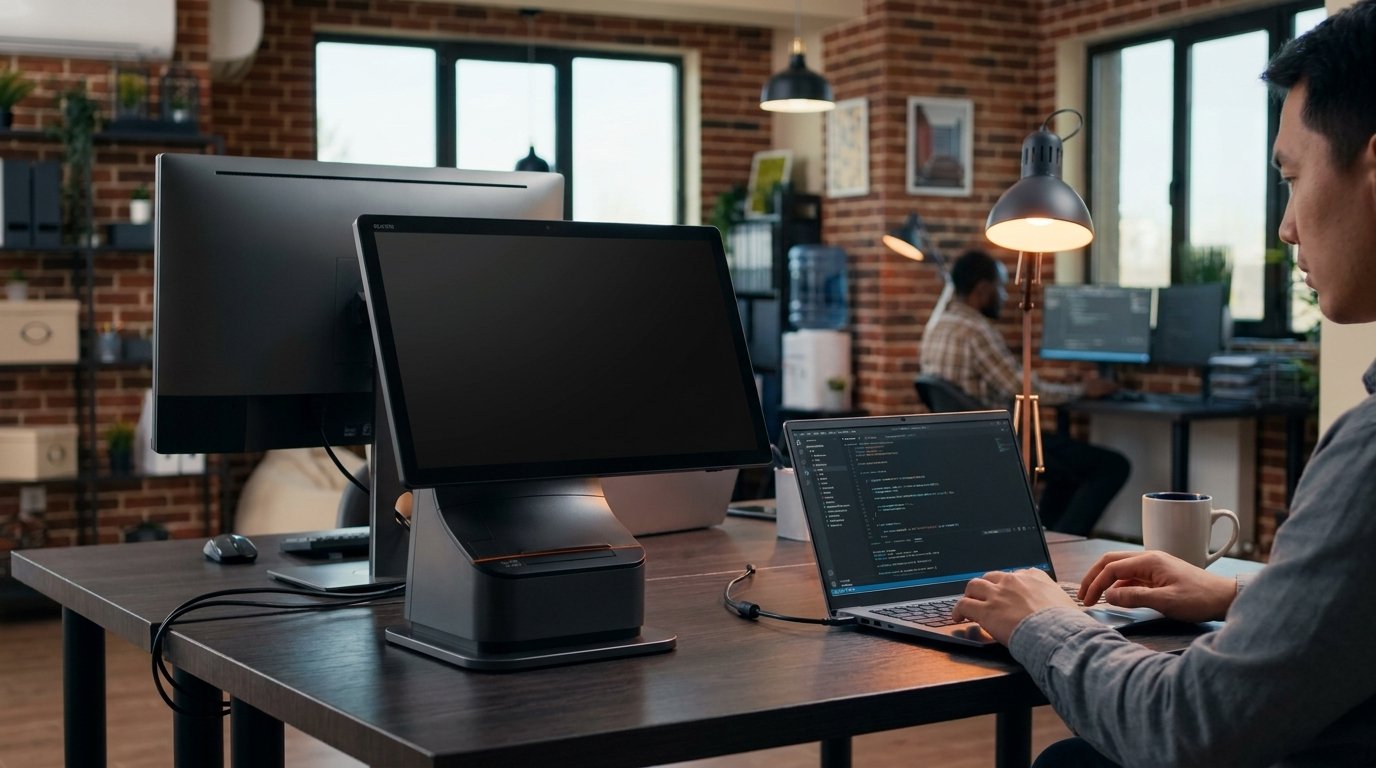
An ISV pilot program for Android POS hardware is now a required step for any vertical SaaS company that plans to attach devices to a subscription. The global vertical SaaS market is estimated at USD 143.45 billion in 2026 and growing at a 16.3 percent CAGR through 2035, according to industry analysis published by Qubit Capital. That growth is being pulled forward by product teams who bundle hardware with their software instead of leaving the customer to source a device.
SUNMI already runs 33,000+ apps and 66,000+ partners across 200+ countries. Rosper Technology stocks the full Android POS hardware catalog in 8 North American warehouses with 2 to 7 day delivery.
Yet most ISV pilot programs still fail on the same three points. No scoping document, no KPIs, and no partner criteria for choosing an OEM or distributor. As QSR Magazine documented in a 2026 feature on scaling restaurant technology, most rollouts that fail are killed by a perfect storm of missed site surveys, delayed equipment, and inadequate support structures. The pilot is where those gaps have to be caught.
This ISV pilot program blueprint is written for two audiences. Vertical SaaS product managers building the first Android POS ISV hardware attach for a restaurant, retail, salon, or healthcare product. And CTOs at established platforms who need a repeatable hardware vendor evaluation framework for a new OEM or distributor without disrupting the existing device fleet.
We walk through Day 0 pre-pilot scoping, the 30-60-90 phase model, evaluation KPIs, purchase versus lease models, and the eight partner criteria that separate a distributor who ships a box from one who ships a program. Every recommendation is anchored to Rosper Technology’s ISV channel experience and SUNMI’s global installed base of 1.5 million+ merchants.
ISV pilot program: Key takeaways
- Skip Day 0 and the pilot dies. A written scoping document with use case, transaction volume, peripherals, and success criteria is the difference between a 90 day pilot and a 9 month drift.
- 30 days is discovery, not deployment. Sample units, SDK access, and a working integration on a developer bench. No customer sites yet.
- 60 days is integration under stress. Peripheral testing, first customer test, error logging, and a real transaction path from open to close.
- 90 days is 3 to 5 store validation. Uptime percentage, mean time between failures, transaction latency, integration bug count, and staff training time all measured.
- Distributor matters as much as the device. Sample availability, spare unit pool, warranty coordination, MDM access, and a direct escalation path decide the pilot as much as the hardware spec sheet.
Why ISVs run a hardware pilot before committing
An ISV pilot program is cheap insurance. A structured POS hardware pilot is the alternative to signing a purchase order for hundreds or thousands of units against a device that has not been proven in the customer environment, then discovering the failure mode after the software is already installed in production.
The economics of a failed rollout dwarf the cost of the pilot. According to industry research on restaurant operations covered by MachineQ in 2026, 49 percent of restaurant operators reported significant downtime from equipment failures, and 24 percent estimated revenue loss of $1,001 to $5,000 per hour of disruption. For an ISV whose software attaches to that device, every unplanned outage is also a support ticket, a churn risk, and a reputational hit.
A pilot also catches integration failures that never surface on a developer bench. Peripheral timing, network flakiness, thermal throttling in a hot kitchen or a sunlit window, and the reality of a shift change at 7 pm are all environmental inputs that the SDK docs cannot fully simulate.
Finally, a pilot generates the reference customer story. Three to five stores using the hardware in production for 30 days is the artifact that unlocks the sales pipeline, the investor slide, and the case study that closes the next 50 accounts.
Day 0: pre-pilot scoping
Day 0 happens before any hardware is ordered. The output is a one page scoping document that names the use case, the target transaction volume per device per day, the peripheral set required, the deployment environment, and the exit criteria for the pilot.
Use case definition. Is the device a countertop POS terminal, a handheld order taker, a self-service kiosk, a kitchen display, or a payment-only terminal? Each shape has a different SDK surface, a different peripheral list, and a different failure envelope.
Transaction volume target. A device that will run 200 transactions per day in a suburban salon has a completely different reliability envelope than one running 2,000 orders per day in a fast casual restaurant. Volume drives the stress test parameters.
Peripheral list. Bluetooth barcode scanner, USB receipt printer, RJ11 cash drawer trigger, external EMV pinpad, weight scale, or none of the above. Every peripheral is an integration point that needs its own SDK test.
Environment. Kitchen heat and grease, retail floor light and dust, salon chemical exposure, healthcare cleaning wipe compatibility, or outdoor curbside pickup weather. The environment sets the IP rating, the operating temperature range, and the drop test spec required.
Exit criteria. A pilot without a written definition of success cannot end. Uptime target, integration bug ceiling, staff training time budget, and a Go or No Go decision date all belong in the scoping document.
Days 1 to 30: Discovery phase
The Discovery phase is bench work only. The goal is to prove the SDK, the peripheral integrations, and the transaction path on a developer desk before anything touches a customer site. Rushing this phase is the single most common pilot failure.
Sample unit request. Order 2 to 3 sample devices in the exact configuration the pilot will deploy. Rosper Technology ships sample units from 8 North American warehouses with 2 to 7 day delivery, which matters because a 4 week sample lead time silently eats the first month of the pilot.
Developer program enrollment. SUNMI operates a formal developer portal at developer.sunmi.com with device APIs, cloud open APIs, and an AI development suite for vision and voice. ISVs enroll, sign the developer agreement, and gain access to the SDK, the documentation, and the developer community.
SDK bench integration. Print a receipt, open a cash drawer, capture a barcode, read a card via NFC, and post a transaction to the backend. Every one of those calls has to run cleanly in a loop of 1,000 iterations before the pilot leaves the office.
Initial API integration checklist. Device registration flow, remote provisioning, over-the-air update path, log capture, crash reporting, and MDM enrollment. If any of these are undocumented or unstable, the pilot pauses here.
By Day 30, the ISV team should have a working developer build, a documented list of SDK gotchas, and a clear picture of the peripheral matrix. If any of those are missing, the pilot does not advance to Integration.
Days 31 to 60: Integration phase
The Integration phase moves out of the bench and into a production-like environment. The goal is to prove the device and the software behave under realistic load with realistic peripherals, and to run the first customer test in a controlled setting.
Production-like environment. Set up a mock store or lab that mirrors the customer environment. Same Wi-Fi topology, same printer model, same cash drawer, same barcode scanner, and the same power conditioning as the target site.
Peripheral integration deep dive. Test every peripheral through the SDK with the exact firmware versions the customer will run. USB re-enumeration after reboot, Bluetooth pairing persistence, thermal printer paper-out handling, and cash drawer trigger latency all need documented behavior.
Stress testing. Simulate a realistic peak day. If the target is 2,000 transactions across an 8 hour shift, script that load and let it run overnight. Watch for thermal throttling, memory leaks, and any handler that degrades after hour 4.
First customer test. Deploy 1 or 2 devices to a single friendly customer site. Not a production rollout, an instrumented test where the ISV team is on the ground for the first shift, capturing every anomaly and every staff question.
Error logging and telemetry. Wire up crash reporting, transaction latency logging, and device health telemetry before the first customer test, not after. The Integration phase is worthless without data.
Days 61 to 90: Validation phase
The Validation phase is a real pilot deployment across 3 to 5 customer sites. The goal is to prove the device and the software survive contact with the full customer environment, and to generate the KPI dataset that makes the Go or No Go call.
Site selection. Pick 3 to 5 stores that represent the range of the target market. One high-volume site, one low-volume site, one with an aggressive network environment, one with a difficult physical layout, and one that mirrors the median customer. Uniform easy sites hide problems.
Error rate tracking. Log every device restart, every SDK exception, every failed transaction, and every peripheral drop. The target for Validation exit is well under 1 percent failed transactions and mean time between failures measured in hundreds of hours, not tens.
Throughput metrics. Transactions per hour at peak, average transaction latency from customer tap to receipt print, and end-to-end order latency from ring to kitchen display or downstream system. These are the numbers that go into the case study.
Staff training feedback. How long did the first shift take to reach baseline competence? What are the top 5 support questions? Which UI flow generated the most calls to the manager? Staff feedback is a leading indicator of scaled support cost.
At day 90, the ISV team owns a full KPI report, 3 to 5 customer references in production, and a documented Go or No Go decision. If Go, the same operational playbook scales to the next 50 stores.
Evaluation KPIs for the ISV pilot program
Five KPIs decide whether the pilot passes. Every one of them belongs in the scoping document on Day 0, so the pilot is measured against agreed numbers rather than gut feel at day 90.
Uptime percentage. Time the device is available to accept transactions divided by scheduled operating time. 99.5 percent is a defensible pass bar for most vertical SaaS use cases. 99.9 percent for payment-critical flows.
Mean time between failures. Hours of transaction runtime between events that require a device restart, a manual reset, or a support ticket. Target above 500 hours for a countertop POS terminal in a food service environment.
Transaction latency. Milliseconds from user action (tap, insert, scan) to on-screen confirmation and receipt print. 95th percentile matters more than average. Target under 3 seconds end-to-end for a card-present POS transaction.
Integration bug count. Distinct defects filed against the device SDK, the peripheral integrations, or the ISV backend that traces to a hardware behavior. Under 10 open medium-severity bugs at day 90 is a reasonable ceiling.
Staff training time. Minutes required to bring a new front-of-house staff member to baseline competence on the device. Under 20 minutes is a strong signal. Over 60 minutes forecasts a scaling problem.
Purchase, lease, and rental models for pilot units
Pilot economics matter because ISVs are typically spending against a design partner budget, not a production purchase order. Three commercial models are common, and each has a place depending on the pilot size and the ISV cash position.
Direct purchase. The ISV buys the sample units and the pilot fleet outright. Best when the pilot converts to a longer-term hardware attach and the ISV wants to redeploy pilot units into staging and QA after Validation ends.
Short-term lease. A 3 to 6 month lease that converts to purchase if the pilot passes. Reduces cash outlay during Discovery and Integration, and gives a clean exit if the pilot is No Go.
Rental for pilot only. Available from some distributors for the 90 day pilot window with a return option. Best for exploratory pilots where the ISV is evaluating multiple OEMs in parallel and needs low-commit optionality.
Rosper Technology supports direct purchase and volume tiered pricing for pilots that anticipate a scaled rollout. Custom quotes and pilot fleet configurations are handled through the Rosper contact channel.
What to look for in an OEM and distributor partner
The hardware pilot is only half the evaluation. The other half is the partner who supplies the hardware, coordinates the warranty, and picks up the phone at 8 am on a store opening day. Eight criteria separate a real partner from a catalog reseller.
Developer support access. Is there a dedicated developer contact, an SLA on SDK questions, and a working community or forum? SUNMI runs a formal developer portal with 38,000+ registered developers and a technical documentation hub.
Sample unit availability. Can 2 to 3 units ship within a week for bench work? A 4 week sample lead time is a hidden pilot killer.
Spare unit pool. Is there a small buffer of spare devices in a nearby warehouse for the 90 day pilot window? A store cannot wait 3 weeks for a replacement.
Warranty coordination. Rosper coordinates the SUNMI 3-year manufacturer warranty on Gen 2 and Gen 3 devices (1-year on Gen 1 and wear parts), with the warranty issued by SUNMI. Details are on the Rosper warranty page.
MDM and remote management. Free SUNMI MDM (Mobile Device Management) is included for fleet management, remote provisioning, OTA updates, and device health telemetry. This is table stakes for any pilot that will scale.
Direct escalation path. A named account contact who can escalate an SDK issue directly to the OEM engineering team. Support tiers that route through 3 layers of email eat pilots for lunch.
Warehouse and logistics coverage. Regional warehouse presence for fast sample and replacement shipping. Rosper stocks Android POS hardware across 8 North American warehouses with 2 to 7 day delivery.
Vertical experience. Prior deployments in the same vertical as the ISV target market. Restaurant, retail, salon and spa, healthcare kiosk, and self-service ordering each have their own hardware quirks. Prior experience compresses the learning curve.
Sample 30-60-90 timeline with milestones
| Phase | Window | Owner | Milestones | Exit gate |
|---|---|---|---|---|
| Scoping | Day 0 | ISV product manager | Use case, volume, peripherals, environment, KPIs, exit criteria signed off | 1-page scoping doc approved |
| Discovery | Days 1-30 | ISV engineering plus OEM developer support | Sample units received, developer enrollment, SDK bench tests, peripheral integration prototype, MDM enrollment tested | Working developer build, SDK gotchas documented |
| Integration | Days 31-60 | ISV engineering plus distributor account contact | Mock store setup, stress test at target volume, first customer test at 1-2 sites, telemetry live, crash reporting live | Under 1 percent failed transactions in mock environment, first customer test green |
| Validation | Days 61-90 | ISV customer success plus distributor field support | 3-5 store deployment, uptime tracking, MTBF logging, latency percentiles, staff training time captured | KPI report meets scoping targets, Go or No Go decision made |
Featured Rosper capabilities for ISV pilot programs
Rosper Technology is the North American distributor for SUNMI, the global Android commercial device leader. The pilot program services are designed around the 30-60-90 framework above, not sold as a generic reseller package.
8 North American warehouses. Sample units and pilot fleet ship in 2 to 7 days across the US and Canada. Fast sample turnaround protects the Day 1 to 30 Discovery window.
SUNMI 3-year warranty. Gen 2 and Gen 3 SUNMI devices carry a 3-year manufacturer warranty (1-year on Gen 1 and wear parts). Rosper coordinates warranty claims during the pilot and after scale-out.
Direct SUNMI partnership. Rosper is SUNMI’s North American distributor with a direct escalation path into SUNMI engineering. SDK issues that stall a pilot get routed to the source, not to a generic support queue.
Developer SDK access. ISVs are enrolled into the SUNMI developer program at developer.sunmi.com with access to device APIs, cloud open APIs, AI development kits, and the technical documentation hub used by 38,000+ registered developers.
Free SUNMI MDM. Mobile Device Management is included with every SUNMI device sold by Rosper. Remote provisioning, OTA updates, and device health telemetry work from day one of the pilot.
Vertical device catalog. The Rosper Android POS hardware catalog covers countertop POS terminals, handheld order takers, kitchen displays, self-service kiosks, and payment devices. ISVs targeting salon, healthcare, retail, or restaurant verticals shortlist from a single distributor.
Common ISV pilot program pitfalls to avoid
Skipping Day 0. A pilot that starts with a sample unit order and no scoping document has no way to end. It drifts into a 6 month research project, and the design partners lose interest.
Bench success as a proxy for production. Every device works on a developer desk. The Integration phase is not optional. Skipping to a 5 store deployment after 30 days of bench work is how ISVs discover peripheral timing bugs in front of paying customers.
Uniform easy pilot sites. Five identical high-performing customer sites do not stress the hardware or the software. The pilot exists to find the failure modes of the median and difficult customer, not to confirm the happy path.
No telemetry. Running a 3 to 5 store pilot without crash reporting, transaction latency logging, and device health telemetry is running the pilot blind. The KPI report at day 90 is only as good as the data feed.
Choosing a distributor by price only. The unit price of the device is a small percentage of the total pilot cost once support tickets, spare units, and integration delays are counted. Distributor capability is the load-bearing variable.
Frequently asked questions about the ISV pilot program
How long should an ISV hardware pilot take?
A disciplined ISV pilot program runs 90 days across three 30-day phases. Discovery on the bench in the first 30 days, Integration under stress in days 31 to 60, and Validation across 3 to 5 real customer sites in days 61 to 90. Pilots shorter than 60 days rarely capture peripheral or environmental failures. Pilots that drift past 120 days signal the scoping document was missing.
How many pilot sites does an ISV really need?
Three to five customer sites is the working range. Fewer than 3 does not surface enough variance in network, layout, and staff behavior. More than 5 blows up the coordination cost without adding statistical signal until the fleet crosses about 25 sites. The 3 to 5 range should span one high-volume site, one low-volume site, one difficult network environment, and one median customer.
Should an ISV buy or lease pilot units?
Direct purchase is the most common path when the pilot is expected to convert to a rollout, because pilot units redeploy into staging and QA after Validation ends. Short-term lease reduces cash outlay for early-stage ISVs still validating product-market fit. Rental for the 90 day pilot window is available for exploratory evaluations across multiple OEMs. Rosper supports direct purchase with volume tiered pricing.
What developer resources does SUNMI provide for ISV pilots?
SUNMI operates a formal developer program at developer.sunmi.com with device APIs, cloud open APIs, an AI development suite for vision and voice, and a technical documentation hub. The program supports 38,000+ registered developers and 33,000+ commercial apps across 200+ countries. Rosper enrolls ISV partners into the program as part of the pilot onboarding.
What warranty applies to SUNMI hardware in an ISV pilot?
SUNMI Gen 2 and Gen 3 devices carry a 3-year manufacturer warranty. SUNMI Gen 1 devices and wear parts (batteries, printer heads, styluses) carry a 1-year warranty. The warranty is issued by SUNMI and Rosper coordinates the claim process for units sold in North America. Full terms are on the Rosper warranty page.
What KPIs should an ISV measure during Validation?
Five KPIs anchor the Validation phase: uptime percentage (target 99.5 percent for most vertical SaaS use cases), mean time between failures (target above 500 hours in a food service environment), transaction latency (95th percentile under 3 seconds end-to-end for card-present POS), integration bug count (under 10 open medium-severity bugs at day 90), and staff training time (target under 20 minutes to baseline competence).
How does an ISV request a hardware pilot with Rosper?
ISVs contact Rosper through the standard contact channel with a completed Day 0 scoping document. Rosper responds with a sample unit configuration, developer program enrollment, a pilot fleet quote, and a named account contact for the 90 day pilot window. Sample units typically ship in 2 to 7 days from one of 8 North American warehouses.
Next step for ISV product teams
An ISV pilot program is a discipline, not a purchase order. The 30-60-90 framework turns a vague hardware evaluation into a Day 0 scoping document, three 30-day phases with defined exit gates, five measurable KPIs, and eight partner criteria that decide whether the distributor is a real partner or a catalog reseller.
Product teams building a new hardware attach for restaurant, retail, salon, healthcare, or self-service verticals can start the Day 0 conversation with Rosper Technology through the Rosper contact page. Sample units, SUNMI developer program enrollment, and a pilot fleet quote follow the scoping call.