
If you manage a small or mid-size warehouse and you’re shopping for an Android handheld terminal for warehouse operations, you’ve probably noticed the same thing: most of the content online is written for enterprise buyers with dedicated IT departments and six-figure hardware budgets.
Last updated: March 2026. All specs and pricing confirmed with current SUNMI product data and Rosper US inventory.
Looking for a desktop POS terminal for your warehouse office? See our SUNMI T3 vs T2s desktop POS comparison.
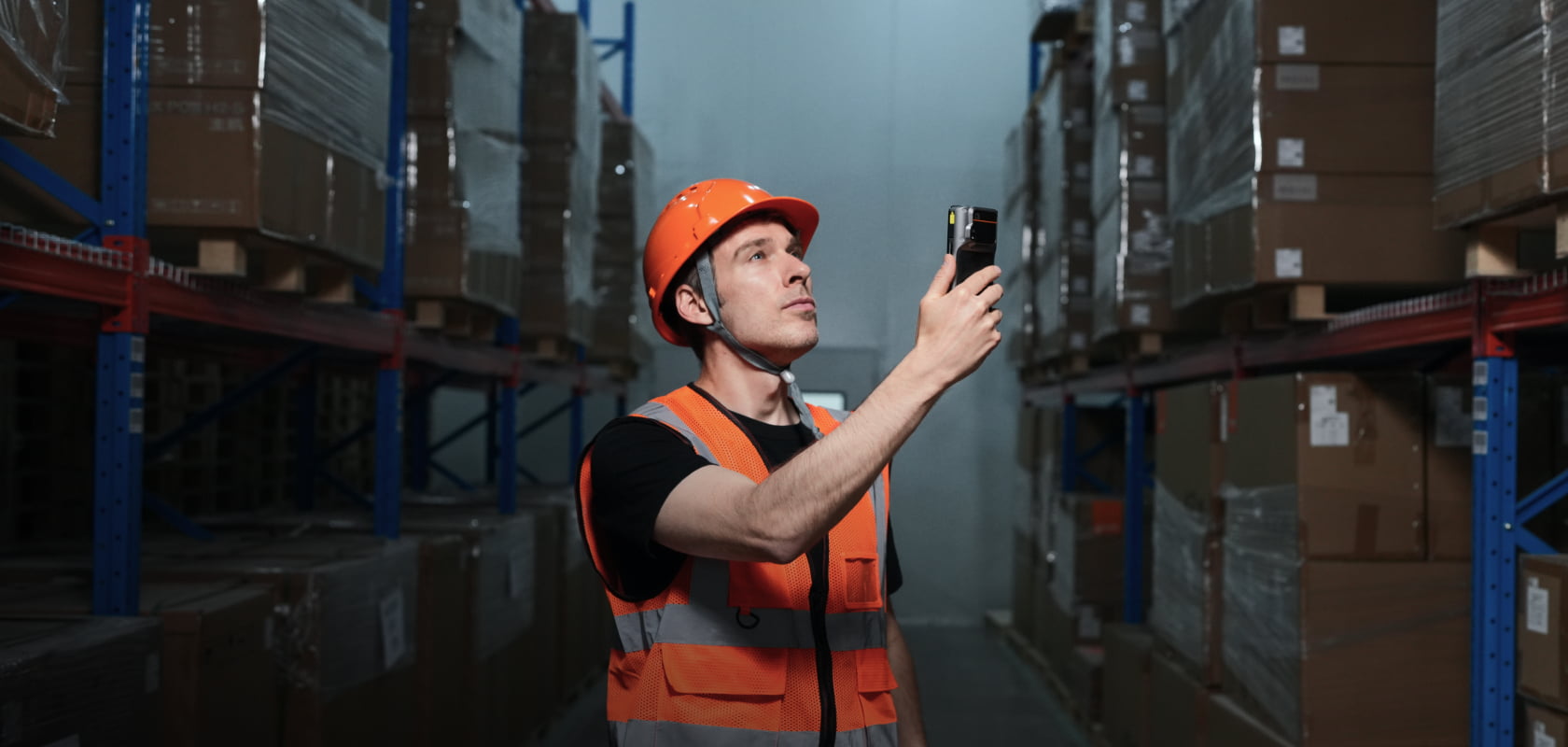
Enterprise-grade devices from the big vendors are great tools for distribution centers with 500 people and a procurement team. But if you’re running a 20,000 sq ft warehouse with a team of 15, you need something that’s rugged enough to survive the floor, runs standard Android apps, and doesn’t require a licensing agreement before you can turn it on.
Key takeaway: For small and mid-size warehouses in 2026, the SUNMI L3 offers IP68 durability, Android 14, and hot-swap batteries at roughly 40-60% less than enterprise scanners from the big vendors. It runs standard WMS apps with no per-device licensing fees.
This guide focuses on Android handheld terminals that make sense for small and mid-size warehouse operations in 2026, with a particular focus on what the SUNMI L3 offers as a cost-effective, enterprise-capable alternative.
What to Look for in an Android Handheld Terminal for Warehouse Work
Before getting into specific models, here are the specs that actually matter for warehouse work:
Durability ratings. IP68 means it can survive dust and 1.5m drops onto concrete – the minimum standard for a real warehouse environment. Consumer Android phones typically offer IP67 at best and aren’t designed for repeated drops.
Scanner type. Built-in 2D barcode scanner (not camera-based). Camera scanning is slow and unreliable in poor lighting. A purpose-built scan engine gives you fast, accurate reads from any angle, including damaged barcodes.
Battery life. A full shift is 8-10 hours. You need a battery that gets you there, ideally with hot-swap capability so workers can swap batteries without powering down.
Android version and GMS. Enterprise WMS (Warehouse Management Software) and most modern inventory apps require Google Mobile Services (GMS). Check your software vendor’s requirements before choosing hardware.
Connectivity. Dual-band Wi-Fi (2.4GHz/5GHz) and 4G LTE for areas with poor Wi-Fi coverage. Bluetooth 5.0+ for peripheral connectivity.
Memory. 4GB RAM minimum for running WMS software alongside other apps. 64GB storage minimum.
SUNMI L3: The Practical Choice for Mid-Market Warehouses
The SUNMI L3 is not trying to replace traditional enterprise-grade scanners costing $1,500+. It’s positioned as a professional-grade Android handheld for operations that need real enterprise features without the enterprise price tag.
Here’s what you get:
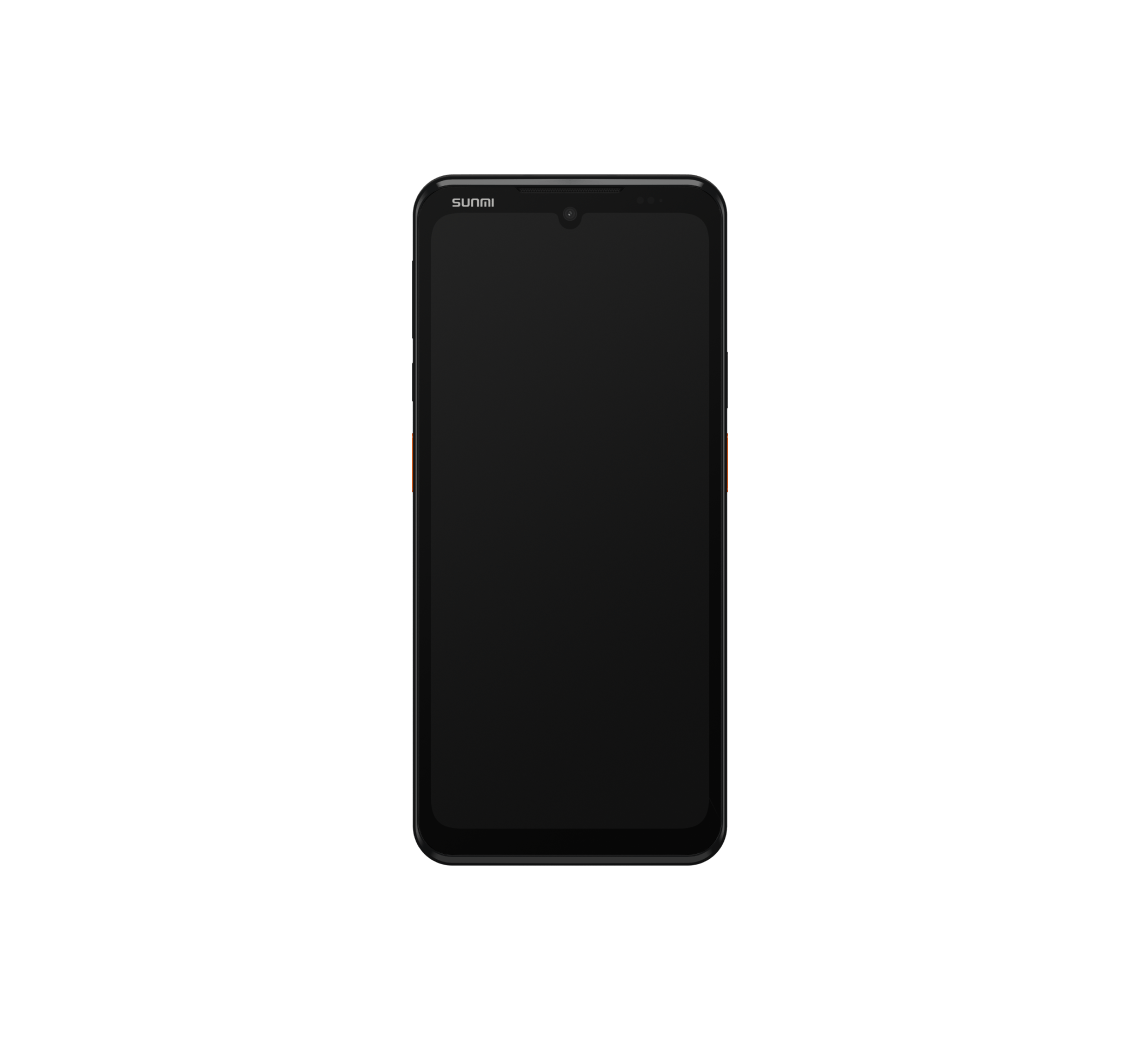
Key Specifications
| Spec | SUNMI L3 |
| OS | Android 14, SUNMI OS 4.0 |
| Processor | Octa-core, up to 2.2GHz |
| RAM / Storage | 4GB+64GB or 6GB+128GB |
| Display | 6.75″ HD+, 720×1600, IPS, 420 nits |
| Scanner | Professional-grade scan engine (premium scan module in select configs) |
| NFC | Dual NFC – tap on screen and tap on back |
| Camera | 5MP front + 13MP AF rear |
| Battery | 5000mAh, removable, hot-swap supported |
| Connectivity | 4G LTE (global bands), Wi-Fi 5 (802.11 a/b/g/n/ac), Bluetooth 5.2 |
| Durability | IP68, 1.5m drop test on concrete |
| GPS | GPS/Glonass/Beidou/Galileo |
| Fingerprint | Yes |
| Weight | 282g (scan version) |
| Dimensions | 175 x 79 x 15mm |
| Price Range | Typically 40–60% less than enterprise alternatives; contact us for pricing |
The L3 runs Android 14 – that’s important. It means compatibility with current WMS applications, Google Play apps, and security patches for the foreseeable future. Most enterprise scanners from 2-3 years ago are already on Android 10 or 11 with unclear upgrade paths.
The optional professional-grade scan module in select L3 configurations is worth highlighting. It delivers the same scanning performance found in leading enterprise scanners, in a package that costs considerably less.
How SUNMI L3 Compares to Enterprise Scanners
To be direct: compared to traditional enterprise-grade scanners, those devices have advantages in certain areas – more ruggedized build options, longer enterprise support contracts, and wider ISV certifications for specific regulated industries.
But for most mid-market warehouses, the practical gaps are smaller than the price gap:
| Feature | SUNMI L3 | Typical Enterprise Scanner (reference) |
| Android version | Android 14 | Android 11 (upgradeable) |
| IP rating | IP68 | IP65/67 |
| Drop test | 1.5m on concrete | 1.8m |
| Battery | 5000mAh removable, hot-swap | 7000mAh hot-swap |
| Scan engine | Professional-grade, optional premium module | Premium scan engine standard |
| LTE | Yes | Yes |
| GMS | Optional | Optional |
| Price | Typically 40–60% less than enterprise alternatives | Higher enterprise price point |
| Licensing fees | None | None (hardware only) |
| Warranty | 3-year SUNMI Care Standard | Varies by vendor |
The typical enterprise scanner has a higher drop spec (1.8m vs 1.5m), and the larger battery is genuinely useful for extra-long shifts. If your operation involves extreme conditions or you need that extra margin of drop protection, enterprise-grade devices are a legitimate choice.
For most small and mid-size warehouses – receiving, pick and pack, inventory counts, route checking – the L3 covers the requirements at a lower entry cost.
SUNMI L3 for Specific Warehouse Use Cases
Receiving and Inbound Scanning
The L3’s 2D scan engine handles GS1, QR, DataMatrix, and all common barcode formats. For receiving operations where you’re scanning cartons, pallet labels, and individual SKUs, the fast-scan engine means workers aren’t slowed down by re-scanning. The 4G LTE backup means connectivity isn’t dependent on Wi-Fi coverage at the loading dock.
Inventory Counting
With a 5000mAh removable battery and hot-swap support, workers can do full inventory counts without losing their session. The 6.75″ display is large enough to show meaningful amounts of data without squinting, and the 420-nit screen holds up in brighter warehouse environments.
Pick and Pack
Android 14 means the L3 runs standard WMS apps from ShipBob, NetSuite, Fishbowl, and similar platforms. Workers can pull orders, confirm picks, and process exceptions through the same interfaces they’d use on any Android device – no proprietary SDK required.
Route Optimization and Delivery Confirmation
The L3 RFID version adds UHF RFID capability, useful for operations using RFID labels. The NFC dual-tap (on screen and on back of device) handles contactless confirmations. GPS supports route tracking when workers move between facilities.
For businesses also serving restaurant and retail environments, see our SUNMI restaurant POS hardware guide.
What About the SUNMI L2s?
The L2s is SUNMI’s previous generation handheld and is still available in the market. Key differences from the L3:
- Runs an older OS version (Android 11)
- Smaller form factor and lower weight
- Lower MSRP – useful if budget is the primary constraint and Android 14 isn’t required
- Accessories like 4-slot charging bases and UHF trigger handles are widely available
If you’re running a simpler workflow and cost is the deciding factor, the L2s is still a capable device. However, for a 2026 deployment where you want a 3-4 year use life, we’d recommend starting with the L3.
Deployment Considerations for Small Warehouses
Fleet charging. SUNMI offers a 4-slot charging base for the L3. If you’re running a team of 10-15, ordering 3-4 charging bases at the same time as your device order is the right move. It simplifies shift handoffs and keeps devices charged and organized.
MDM (Mobile Device Management). For fleets of 5+ devices, using an MDM platform (Microsoft Intune, VMware Workspace ONE, SOTI MobiControl) lets you push app updates, enforce security policies, and remotely wipe devices if needed. The L3’s Android 14 with GMS-EDLA certification means it works with all major MDM platforms.
Wi-Fi infrastructure. The L3 supports Wi-Fi 5 (802.11 ac). If your warehouse Wi-Fi is older 2.4GHz-only infrastructure, you’ll want to assess coverage before deployment – dead zones will frustrate workers more than the device choice. The L3’s 4G LTE is a useful backup but shouldn’t be the primary network.
Software compatibility. Before ordering, confirm your WMS or inventory management platform supports Android 14 and GMS. Most modern platforms do, but it’s worth a 5-minute check with your software vendor.
Pricing and Where to Buy
We have supplied SUNMI L3 units to warehouse and logistics operations across the US, from 5-unit deployments for local distributors to 50+ unit rollouts for regional fulfillment centers. Here is what to expect on pricing and logistics:
SUNMI L3 pricing through authorized US distributors is typically 40–60% less than comparable enterprise-grade scanners. Pricing varies by configuration (RAM/storage, scan engine, RFID), with volume pricing available for orders of 10+ units. Contact us for a current quote.
Rosper stocks the L3 in multiple configurations in our 8 warehouses across the US & Canada. Most orders arrive in 2-7 business days.
Each device comes with the SUNMI official 3-year warranty (SUNMI Care Standard). Rosper assists with all warranty claims – you don’t have to navigate overseas support on your own.
If you’re buying for a fleet (5+ units), contact us for volume pricing.
FAQ
What is the best Android handheld terminal for a small warehouse?
For small and mid-size warehouses in 2026, the SUNMI L3 is a strong practical choice. It runs Android 14, is IP68 rated with a 1.5m drop spec, and includes a removable hot-swap 5000mAh battery. With optional professional-grade scan engine configurations, it delivers enterprise-level scanning performance at a significantly lower price point than full enterprise scanners.
Is SUNMI L3 compatible with warehouse management software?
Yes. The L3 runs Android 14 with optional GMS-EDLA certification, making it compatible with Google Play apps and most major WMS platforms. Confirm Android 14 support with your software vendor before ordering.
How does SUNMI L3 compare to enterprise scanners?
The L3 is a cost-effective alternative to traditional enterprise-grade handheld scanners. Enterprise devices have advantages in certain areas (higher drop spec, longer enterprise support contracts). For most small and mid-size warehouse operations, the L3 covers the requirements at typically 40–60% of the enterprise price point.
Does SUNMI L3 support barcode scanning?
Yes. The L3 includes a professional-grade scan engine and reads all standard 1D/2D barcode formats. Select configurations include a premium scan module for high-volume environments. An RFID version is also available.
What Android version does SUNMI L3 run?
Android 14 with SUNMI OS 4.0.
Is SUNMI L3 IP68 rated?
Yes – IP68 with a 1.5m drop test on concrete.
Where can I buy SUNMI L3 in the United States?
Rosper is an authorized SUNMI distributor with 8 warehouses across the US & Canada. Most orders arrive in 2-7 business days.
What warranty comes with SUNMI L3?
SUNMI official 3-year warranty (SUNMI Care Standard). Rosper assists with all warranty claims as an authorized distributor.
Thinking About Equipping Your Warehouse?
If you’re evaluating handheld terminals for a warehouse deployment – whether it’s 5 units or 50 – we’re happy to put together a quote and answer questions about configuration options.
Rosper is an authorized SUNMI distributor with US-based inventory and actual experience supporting warehouse and logistics customers. Most SUNMI L3 configurations ship from our warehouses across the US & Canada within 1-2 business days.
Request a quote or ask us a question – rospertech.com/contact