
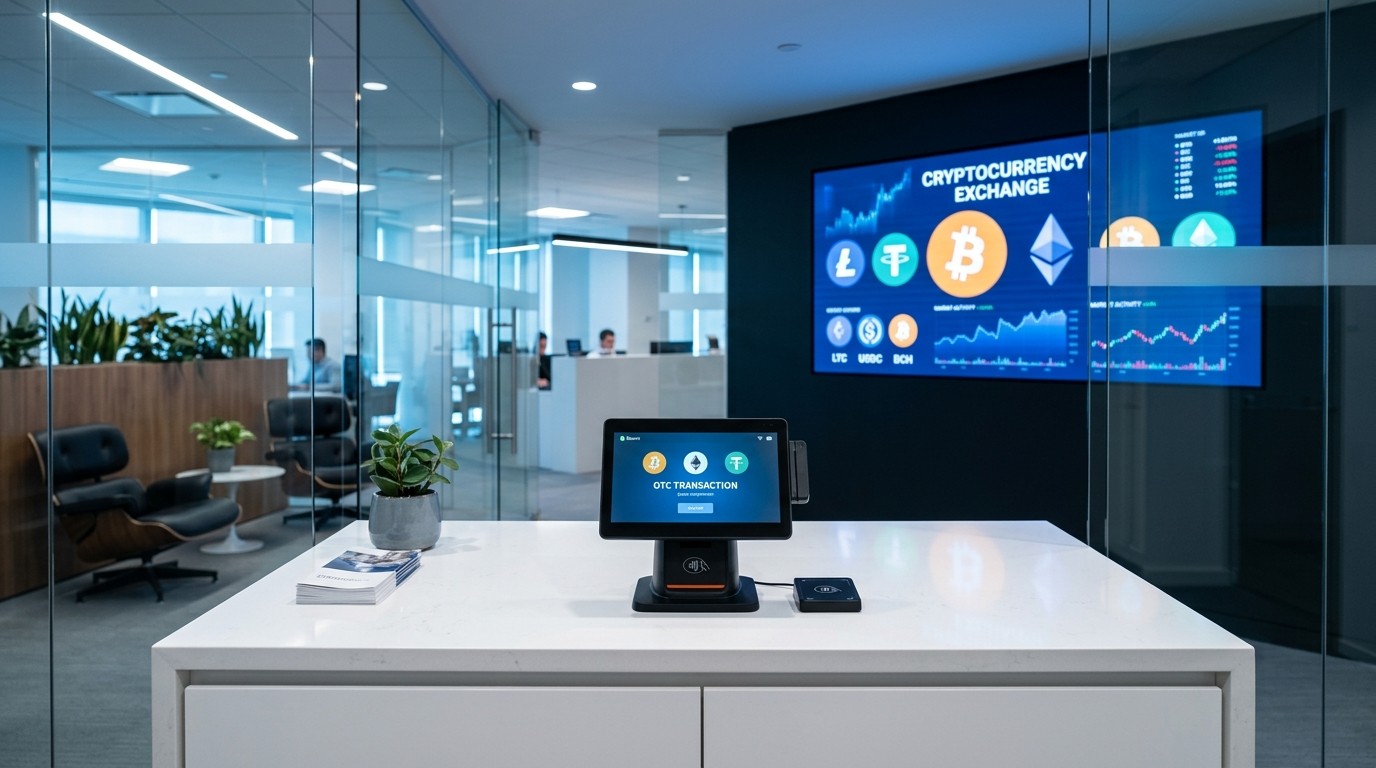
Payment certification is central to any crypto POS hardware decision, so it is worth reviewing PCI PTS 6.x on SUNMI payment devices.
Alternative payment businesses operate in a regulatory environment that differs significantly from traditional retail or restaurant POS, and crypto POS hardware has to reflect that. OTC crypto exchanges, check cashing services, money transfer counters, and prepaid card distributors all process financial transactions that require specific hardware capabilities. The POS terminal at these desks needs to handle high-value transactions, maintain PCI compliance, and integrate with specialized financial software.
This guide covers what operators of alternative payment desks should look for in crypto POS hardware, with a focus on practical deployment considerations for the US and Canadian markets.
Key Takeaways
Alternative payment desks need POS hardware that prioritizes security, receipt accuracy, and software integration flexibility. Key requirements include PCI-certified payment terminals, 80mm receipt printers for audit trails, and Android-based platforms that support custom financial applications. Rosper stocks SUNMI POS hardware in US warehouses for fast deployment to alternative payment locations.
Understanding the Alternative Payment Desk Environment
Transaction patterns that differ from retail
Unlike a coffee shop that processes dozens of $5 to $10 transactions per hour, alternative payment desks handle fewer but higher-value transactions. An OTC crypto desk might process 15 to 30 transactions per day with an average ticket size of $200 to $2,000. Check cashing locations handle similar volumes with ticket sizes ranging from $50 to $5,000.
This transaction profile means the POS terminal needs reliable receipt printing for audit trails, accurate cash drawer management, and the ability to integrate with AML (Anti-Money Laundering) compliance software. The hardware must support these software requirements without performance bottlenecks.
Regulatory and compliance requirements
Alternative payment businesses operate under federal and state regulations that mandate specific record-keeping and reporting capabilities. The POS hardware must support timestamped receipt printing, transaction logging, and integration with compliance monitoring software. PCI DSS compliance is mandatory for any hardware that processes card-present transactions.
Operators should verify that their POS terminal vendor provides PCI PTS (Payment Card Industry PIN Transaction Security) certification documentation. This documentation is required when filing with payment processors and when undergoing compliance audits from FinCEN or state regulatory bodies.
Essential Crypto POS Hardware for Alternative Payment Desks
All-in-one POS terminals
An all-in-one POS terminal combines the touchscreen display, receipt printer, and payment card reader into a single unit. This form factor works well for payment desks where counter space is limited and the operator needs a single device that handles the complete transaction workflow from customer identification through payment processing to receipt printing.
Android-based POS terminals are particularly well-suited for alternative payment desks because they can run custom financial applications alongside standard POS functions. The operator can switch between a crypto exchange application, a check cashing module, and a money transfer interface on the same device without rebooting.
Dedicated payment terminals
Some alternative payment operations use a separate payment terminal alongside a desktop computer or tablet. In this configuration, the computer handles the financial application and customer management, while the payment terminal processes the actual card transaction. This setup requires PCI-certified payment hardware with EMV and contactless capabilities.
Compact payment terminals with built-in printers are ideal for this use case because they minimize counter footprint. The operator enters the transaction amount on the desktop application, the customer taps or inserts their card on the payment terminal, and the terminal prints the payment receipt.
Receipt printers for audit trails
Alternative payment businesses generate receipts that serve dual purposes. The customer receipt provides proof of transaction. The merchant receipt serves as an audit trail record that may be reviewed during compliance examinations. For this reason, 80mm receipt printers that produce clear, durable receipts are preferred over 58mm compact models.
The receipt should include timestamp, transaction ID, operator ID, payment method, and amount. Some operations also print compliance disclaimers on every receipt. Ensure the printer driver supports custom receipt templates with sufficient content capacity for these requirements.
SUNMI Devices for Alternative Payment Operations
Countertop POS with integrated payment
The SUNMI T3 Pro Super is a 15.6-inch Android countertop POS terminal with an integrated receipt printer and support for external payment peripherals. Its large display works well for financial applications that present detailed transaction summaries, compliance disclosures, and customer verification screens.
The T3 Pro Super also supports dual-OS configurations, which is useful for payment desks that need to run both Windows-based compliance software and Android-based POS applications on the same terminal.
Compact payment terminal
The SUNMI V3 family offers compact Android payment devices with built-in receipt printing and NFC contactless payment support. These devices work well as dedicated payment terminals alongside a desktop financial application. The V3 handheld form factor also suits mobile payment operations at events or temporary locations.
The P2 LOA (Letter of Authorization) package for the SUNMI P2 payment terminal enables ISOs and payment processors to certify the device on their payment networks. This is particularly relevant for alternative payment desks that process through specific payment platforms.
Deployment Considerations for Crypto and Alternative Payment Desks
Alternative payment businesses often operate in environments that require additional physical security measures. The POS terminal should be mounted securely to the counter using locking stands or enclosed housings. In locations with high customer traffic, consider tamper-evident cable locks for peripheral devices.
Network connectivity is another consideration. Some crypto desk locations may have unreliable internet connections. POS hardware that supports offline transaction processing with automatic sync when connectivity is restored provides a safety net for these environments.
Sourcing Crypto POS Hardware for Your Payment Desk
Building a Crypto or Alternative Payment Desk?
Share your payment application, device requirements, countertop or mobile workflow, transaction volume, and launch date, your destination, and target date. Rosper will confirm a compatible Android POS hardware configuration for the payment workflow, current warehouse availability, and a quote with a realistic lead time. For a multi-site deployment, include the site count and rollout schedule so we can plan staging and kitting.
Key Hardware Requirements
- Real-time integration — Crypto desks need instant exchange rate sync to avoid compliance issues
- KYC compliance — Built-in camera and NFC for ID verification
- Physical security — Tamper-evident mounting for high-cash environments
- Multi-network support — Western Union, MoneyGram, check verification databases
- Network redundancy — Wi-Fi + Ethernet failover for price-sensitive crypto trades
Compliance and Reporting
FinCEN scrutiny on crypto and check cashing has increased. Look for POS hardware with automatic audit trails and compliance reporting. Multi-state operators need centralized transaction logging across locations.
Getting Started
For a first desk, the SUNMI V3 handles receipt printing, payments, and your exchange app in one compact device. Scale up with dedicated terminals as volume grows. Rosper ships from 8 North American warehouses with 2-7 day delivery.
Frequently Asked Questions
Can SUNMI POS terminals run crypto exchange software?
Yes. SUNMI devices run standard Android, which supports custom application installation. Crypto exchange operators can deploy their trading application directly on SUNMI hardware alongside standard POS functions.
What POS hardware is best for an OTC crypto desk?
A compact all-in-one POS terminal with receipt printing and payment processing works best. The device needs to run custom crypto trading software while also handling customer-facing payment transactions. Android-based terminals provide the software flexibility these operations require.
Do alternative payment desks need PCI certification?
Yes. Any hardware that processes card-present transactions must be PCI DSS compliant. Operators should request PCI PTS certification documentation from their hardware vendor to provide to their payment processor and compliance auditors.
What receipt printer width is best for compliance audit trails?
80mm receipt printers are recommended for alternative payment desks because they provide sufficient width for detailed transaction records, compliance disclaimers, and customer identification summaries. 58mm compact printers may truncate important compliance text.
How fast can I get POS hardware for a new payment desk location?
Most hardware orders from US warehouse inventory arrive within 2 to 7 business days. Express shipping options are available for time-sensitive deployments. Pre-configured units with software pre-loaded can reduce on-site setup time.
Can a POS terminal process both cash and card transactions?
Yes. POS terminals with cash drawer connectivity can handle both cash and card transactions. The cash drawer opens automatically when a cash payment is recorded. Some alternative payment operations also support QR code payments and mobile wallet transactions through NFC-enabled terminals.
Related reading: Android POS terminal buyers guide.