
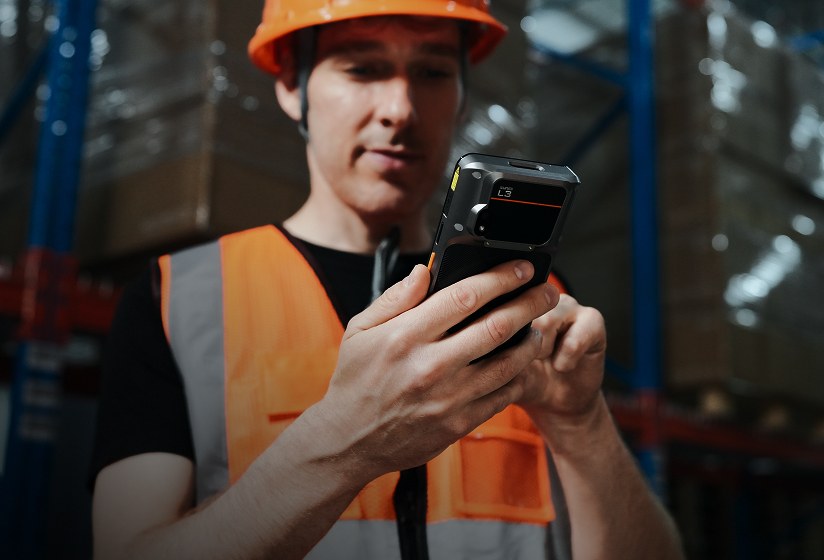
SUNMI payment terminals and Interac Flash: a Canadian merchant’s guide
Interac Flash is the most common way Canadians tap to pay in person. If you are evaluating SUNMI payment terminals, your first question is probably whether they support Interac Flash. Yes, any SUNMI terminal with a built-in NFC reader can process Interac Flash when paired with a certified Canadian payment processor. This guide covers which devices support it, what you need from your processor, and how fees compare to credit card contactless.
What is Interac Flash and why it matters for Canadian merchants
Interac Flash is the contactless payment feature of Canada’s Interac Debit network. It lets customers tap their debit card or mobile wallet on an NFC-enabled payment terminal to complete a purchase without inserting the card or entering a PIN for transactions under $250, with a cumulative tap limit (typically around $500) before a PIN is forced as a fraud control.
For Canadian merchants, Interac Flash is not optional. Interac processes billions of debit transactions annually, and contactless tap now accounts for the majority of in-person debit payments. The fees are significantly lower than credit card processing, transactions complete in under two seconds, and Canadian customers expect to tap their debit card everywhere they shop.
How Interac Flash differs from Visa and Mastercard contactless
Canadian merchants accept three types of contactless tap: Interac Flash (debit), Visa payWave (credit), and Mastercard Contactless (credit). All use NFC and look identical to customers, but the back-end cost differences are significant.
| Feature | Interac Flash (Debit) | Visa payWave / MC Contactless (Credit) |
|---|---|---|
| Network | Interac (Canadian domestic) | Visa / Mastercard (international) |
| Transaction type | Debit (direct from bank account) | Credit (billed to credit card) |
| Merchant fee structure | Flat per-transaction fee, typically $0.05-$0.15 depending on processor and volume | Percentage of sale (typically 1.4%-2.6%) |
| Contactless limit | $250 per tap (no PIN required), with a cumulative tap limit around $500 before a PIN is forced | $250 (varies by issuer) |
| Settlement | Typically next business day (varies by processor agreement) | 1-3 business days |
| Chargeback risk | Very low (funds verified in real time) | Higher (credit disputes possible) |
| Mobile wallet support | Apple Pay, Google Pay (subject to card-issuer support for Interac-in-wallet) | Apple Pay, Google Pay, Samsung Pay |
On a $50 bill, Interac Flash costs roughly $0.05-$0.15 while credit tap at 2% could cost around $1.00. Over hundreds of daily transactions, the savings are substantial but smaller than some older “half-a-cent per tap” marketing claims suggest. See the Payments Canada and Moneris published rate cards for your specific fee schedule.
Which SUNMI devices support Interac Flash
Interac Flash requires an NFC reader in the payment terminal. Here is the complete list of SUNMI devices with built-in NFC.
Models that need an NFC accessory. The SUNMI T3 Pro and T3 Pro Max main units do not have a built-in NFC reader. Pair them with an NFC-equipped customer-facing display (C02020003 10.1″ or C02020004 15.6″) to accept Interac Flash. The D3 Pro follows the same pattern with its own Tap on Glass NFC CFD. The base SUNMI T2s also lacks main-unit NFC and requires an NFC-equipped CFD or an external Interac-certified pin pad.
Desktop terminals with NFC
| Device | NFC location | Screen | Key specs |
|---|---|---|---|
| SUNMI T3 Pro + NFC CFD | Customer-facing display | 15.6″ + 10.1″ or 15.6″ CFD | 6 GB RAM, 128 GB storage, NFC on 10.1″ (C02020003) or 15.6″ (C02020004) USB CFD accessory |
| SUNMI T3 Pro Max + NFC CFD | Customer-facing display | 15.6″ + 10.1″ or 15.6″ CFD | 6 GB RAM, 128 GB, built-in 80 mm Seiko printer with auto-cutter; NFC on CFD accessory (C02020003 or C02020004) |
| SUNMI T3 | Built into main unit | 15.6″ FHD | 4 GB RAM, 64 GB storage, Wi-Fi |
| SUNMI T3 80 mm | Built into main unit | 15.6″ FHD | 4 GB RAM, 64 GB, 80 mm printer |
| SUNMI D3 Pro + NFC CFD | Customer-facing display | 15.6″ + 10.1″ CFD | 4 GB RAM, 64 GB, optional NFC on CFD |
| SUNMI D3 Mini | Built into main unit | 4.5″ operator + optional 15.6″ customer display | 3 GB RAM, 32 GB, 80 mm printer, NFC |
Handheld and mobile terminals with NFC
| Device | Form factor | Screen | Key specs |
|---|---|---|---|
| SUNMI V3 MIX | Handheld | 10″ | 4 GB RAM, 32 GB, 80 mm printer, 4G, NFC |
| SUNMI V3H | Handheld | 6.75″ | 4 GB RAM, 64 GB, 58 mm thermal printer (receipt or label media), 4G, NFC |
| SUNMI P3 AIR | Payment terminal | 6″ | 4 GB RAM, 64 GB, 4G, NFC, 13 MP camera |
| SUNMI P3 MIX | Payment terminal | 10″ | 4 GB RAM, 32 GB, 80 mm printer, 4G, NFC, scanner |
| SUNMI P3H | Compact payment terminal | 5″ | 2-4 GB RAM, 32-64 GB, 4G, NFC |
Self-service and kiosk with NFC
| Device | Form factor | Screen | Key specs |
|---|---|---|---|
| SUNMI CPad | Tablet / self-service | 14″ | 8 GB RAM, 128 GB, NFC, 4G, eSIM |
Note: The NFC reader is hardware. Whether it processes Interac Flash, Visa payWave, or Mastercard Contactless depends on the POS software and payment processor running on the device.
Connecting SUNMI terminals to Canadian payment processors
Getting Interac Flash working requires three components: NFC-enabled hardware, certified POS software, and a Canadian payment processor account.
Step 1: Choose your payment processor
Select a Canadian payment processor that supports Interac Debit and Interac Flash: Moneris (Canada’s largest, native Interac support), Global Payments (strong Canadian presence, multi-currency), Chase Canada (competitive rates), Desjardins (Quebec-focused, full Interac), or TD Merchant Solutions (integrated with TD banking).
Step 2: Select certified POS software
Your POS software must be certified by your payment processor for use on SUNMI Android hardware. It handles routing taps to the correct network (Interac, Visa, Mastercard), managing transactions and receipts, and applying provincial tax rates. Rosper’s ISV partner network includes providers who have already certified their software with Canadian processors on SUNMI hardware.
Step 3: Set up your merchant account
Apply for a merchant account with your chosen processor. You will need your business registration number, a Canadian bank account, expected monthly transaction volume, and physical business address. Most processors approve standard retail and restaurant applications within 1-3 business days.
Step 4: Configure and test
Once your merchant account is active and POS software is installed on the SUNMI terminal, enter your merchant credentials, complete test transactions for each payment type (Interac Flash, Visa, Mastercard), verify receipts print with the correct tax rates and language, and confirm settlement reports match your processor’s dashboard.
When we ship SUNMI terminals to our Canadian customers from our Brampton warehouse, we include setup documentation and connect you with the right software partners.
Step 5: Go live
Most merchants complete the entire process, from ordering hardware to processing the first live Interac Flash transaction, within one to two weeks.
Interac Debit vs credit card fees: what Canadian merchants actually pay
The fee difference between Interac Debit and credit cards is where the real savings happen.
Interac Debit uses a flat-fee model, typically $0.05 to $0.15 per transaction depending on your processor and volume, plus a small monthly access fee. Visa and Mastercard use a percentage-based model at roughly 1.4% to 2.6% of the transaction, plus processor markup. The difference still adds up fast on larger tickets:
| Transaction amount | Interac Flash fee (est.) | Credit card fee (est. 2%) | You save |
|---|---|---|---|
| $15 (coffee + pastry) | ~$0.10 | $0.30 | $0.20 |
| $50 (casual dinner) | ~$0.10 | $1.00 | $0.90 |
| $150 (fine dining) | ~$0.10 | $3.00 | $2.90 |
| $200 (group dinner) | ~$0.10 | $4.00 | $3.90 |
For a restaurant processing 200 transactions per day at an average of $40, encouraging debit over credit can save roughly $100-$150 per day in processing fees versus a 2% credit-card blend, or a few thousand dollars per month. Your actual savings depend on your processor rate card, merchant category code, and transaction mix. The per-transaction Interac fee shown here reflects a typical merchant rate (Moneris and other major processors publish current rates on their pricing pages).
NFC technology: how the tap actually works
When a customer taps their Interac debit card on your SUNMI terminal, the NFC reader and card exchange encrypted data through short-range radio waves (13.56 MHz, within 4 cm range). The process takes under two seconds:
- Card detection. The NFC reader detects the card or phone entering its radio field.
- Authentication. Encrypted credentials verify the card is genuine and the terminal is authorized.
- Transaction routing. The POS software routes the tap to Interac (debit) or Visa/Mastercard (credit).
- Authorization. The Interac network verifies funds in real time and returns approval or decline.
- Completion. The terminal displays “Approved” and the receipt prints.
For transactions under $250, no PIN is required per tap, and Interac tracks a cumulative tap limit (typically around $500) before prompting for a PIN as a fraud control. SUNMI’s NFC readers comply with ISO/IEC 14443 and ISO/IEC 18092 standards, the same standards used by Visa payWave, Mastercard Contactless, Apple Pay, and Google Pay.
Quebec restaurants: also plan for SRM-Web / WEB-SRM
If you operate a restaurant in Quebec, Interac Flash is not your only compliance item. Revenu Québec requires restaurants to record sales through a certified sales recording system compatible with the SRM-Web / WEB-SRM cloud program (the successor to the older MEV physical module). New restaurants registered after November 1, 2023 were required to use WEB-SRM immediately, and most existing restaurants had to switch from a physical MEV to WEB-SRM by June 1, 2025, with a limited three-month extension window. See our Quebec bilingual compliance guide and Revenu Québec’s official page at revenuquebec.ca/en/businesses/sales-recording-module/ for details.
Common questions from Canadian merchants
Do I need a separate terminal for Interac Flash?
No. Any SUNMI device with a built-in NFC reader processes Interac Flash, Visa payWave, and Mastercard Contactless through the same hardware automatically.
Can customers still use chip-and-PIN?
Yes. SUNMI payment terminals include chip card readers alongside NFC. Desktop terminals handle chip and PIN through paired payment devices.
What if an Interac Flash transaction is over $250?
The terminal prompts the customer to insert their card and enter a PIN instead.
Does Interac Flash work with mobile wallets?
Yes. Customers can link their Interac debit card to Apple Pay or Google Pay and tap their phone on the SUNMI NFC reader. The transaction routes through Interac just like a physical card tap.
Getting started: order SUNMI terminals for your Canadian business
Rosper is an authorized SUNMI distributor with 8 warehouses across the US and Canada, including Brampton, Ontario. Orders ship domestically with no cross-border duties, arriving in 2-7 business days. Every device includes a 3-year warranty through SUNMI Care, and our ISV and ISO partner network connects you with software certified for Interac Flash on SUNMI hardware. Request a quote for volume pricing, or browse NFC-enabled terminals on our products page.
Frequently asked questions
Does Interac Flash work on all SUNMI terminals?
Interac Flash works on any SUNMI terminal that reads NFC. Devices with NFC built into the main unit include the T3, T3 80 mm, D3 Mini, V3 MIX, V3H, P3 AIR, P3 MIX, P3H, and the 4G CPad variants. The T3 Pro, T3 Pro Max, and D3 Pro use an NFC-equipped customer-facing display (C02020003 10.1″ or C02020004 15.6″ for T3 Pro family; 10″ Tap on Glass CFD for D3 Pro) instead of a main-unit NFC reader. Models without NFC (such as the base T2s) require an external NFC-enabled payment device.
What payment processor do I need for Interac Flash on SUNMI?
You need a Canadian payment processor that supports Interac Debit, paired with POS software certified for SUNMI hardware. Moneris, Global Payments, Chase Canada, Desjardins, and TD Merchant Solutions all support Interac Flash through their certified software partners.
How much does Interac Flash cost per transaction?
Interac Flash transactions typically cost merchants a flat fee of roughly $0.05 to $0.15 per transaction (depending on processor and volume), regardless of the purchase amount. This is significantly less than credit card processing fees on larger tickets, which range from 1.4% to 2.6% of the transaction value. Check Moneris, Payments Canada, or your processor’s published rate card for your specific fee.
Can SUNMI terminals accept both Interac Flash and credit card tap?
Yes. The NFC reader on SUNMI devices supports all major contactless standards. A single tap reader processes Interac Flash (debit), Visa payWave (credit), and Mastercard Contactless (credit). The POS software automatically routes each transaction to the correct network.
How long does it take to set up Interac Flash on a SUNMI terminal?
Most merchants go from ordering hardware to processing their first Interac Flash transaction within one to two weeks. The timeline depends on payment processor account approval (1-3 business days) and POS software installation and configuration.
Does Rosper ship SUNMI terminals to all Canadian provinces?
Yes. Rosper ships from its Brampton, Ontario warehouse to all Canadian provinces and territories. Delivery takes 2-7 business days depending on your location.
Are Interac Flash transactions secure?
Yes. Interac Flash uses the same EMV chip technology and encryption as chip-and-PIN transactions. Each contactless tap generates a unique cryptogram that cannot be reused, making it extremely difficult to counterfeit or replay transactions.