
For payment brands, ISVs, ISOs, and vertical SaaS companies, controlling the hardware experience matters. The merchant unboxes a device with your logo on it, powers it on to a custom boot animation, and lands inside your app. The relationship feels native to your brand, not to a hardware vendor the merchant has never heard of.
In 2026, white-label POS hardware is no longer a custom-build-only proposition. With SUNMI Android as the underlying platform and Rosper as the North American channel, the time and minimum-order thresholds that used to lock white-labeling out of mid-sized programs have dropped significantly. Cosmetic branding can land at low hundreds of units. MDM tenant pre-config is essentially zero-MOQ. Custom Android system images are reserved for higher-volume programs, but the pricing path is predictable.
This guide breaks down what white-label POS hardware actually means in practice across four levels of customization, what the volume and lead time thresholds look like in 2026, and how SUNMI Android hardware fits common payment brand, ISV, and ISO use cases.
Key takeaways
- White-label POS hardware on SUNMI Android covers four levels: packaging, cosmetic branding, MDM tenant pre-config with custom boot, and custom Android system image.
- MDM tenant pre-config plus custom boot animation is the highest-leverage 2026 white-label spec, with effectively zero MOQ for ISV and ISO partners.
- Cosmetic chassis branding starts at 200 to 500 units depending on the form factor. Custom Android images need 1,000 units and up.
- Running customization through the SUNMI authorized channel preserves PCI PTS 6x certification and the 3 year warranty. DIY field modifications void both.
What white-label POS hardware actually means
The phrase “white-label” gets used to describe several different things. Before scoping a program, it helps to be precise.
OEM means the hardware manufacturer builds a device for you under your brand from the metal up. Tooling, certifications, and design cycles run into 12 to 18 months and seven-figure costs. This is rarely the right path unless you ship tens of thousands of units per year and need a form factor that does not exist on the market.
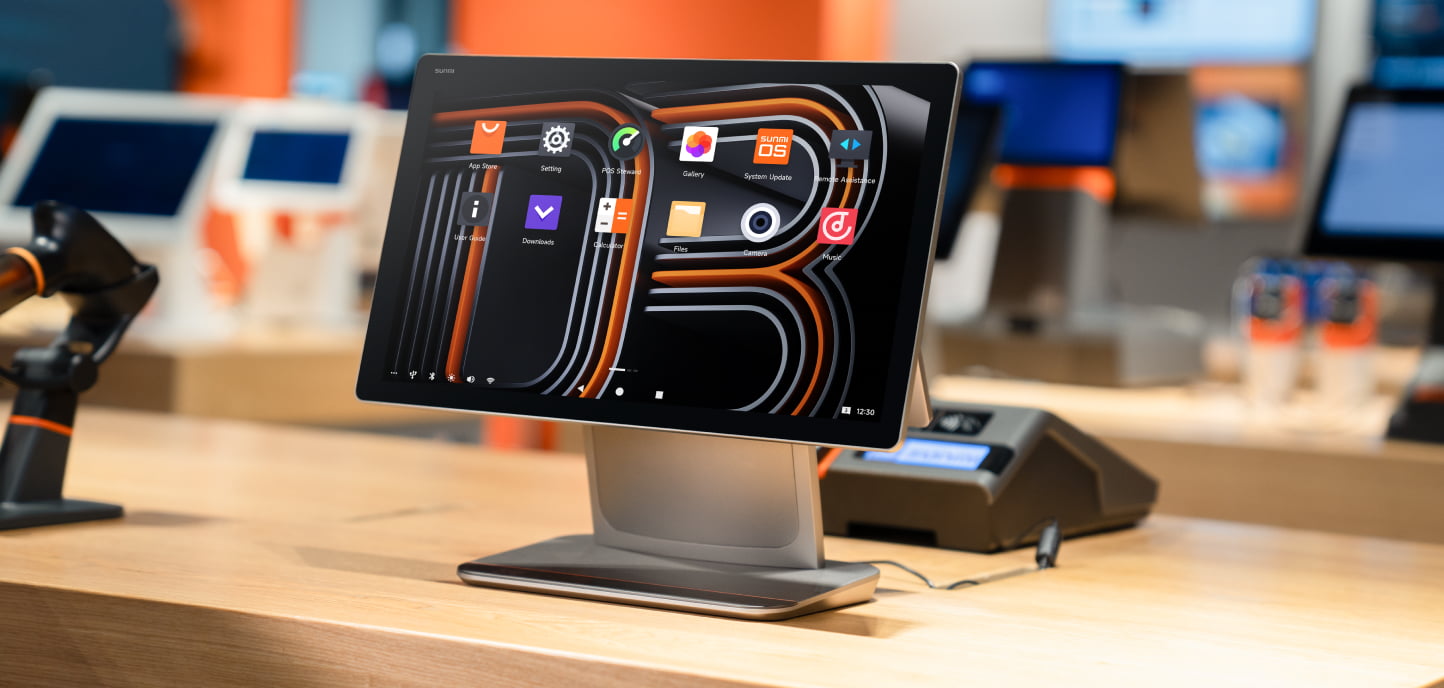
White-label, in the most common 2026 usage, means taking an existing SUNMI device and customizing the layers around it: cosmetic branding, MDM tenant, custom Android image, custom boot animation, custom default app set. The hardware itself stays standard, which preserves certifications, warranty, and ecosystem compatibility.
Reseller or distributor-branded means the channel partner adds packaging, paperwork, and sometimes a sticker, but the device itself stays SUNMI-branded out of the box. This is what most casual “white-label” conversations actually describe.
For this guide, we focus on the true white-label path: standard SUNMI hardware with a customized presentation layer that makes the device feel native to your brand.
The four levels of white-label customization
Level 1: Packaging and channel branding
The lowest-friction level. The device itself ships standard, but the box, quick-start guide, and any paperwork inside carry your brand. The merchant unboxes a branded experience but the device is a stock SUNMI unit.
- Typical MOQ: 50 to 100 units.
- Lead time: 2 to 4 weeks beyond standard.
- Best for: payment ISOs and resellers who want a polished unboxing without changing the device.
Level 2: Cosmetic branding (logo and color)
Logo placement on the chassis, custom color or accent on bezels where the form factor supports it, and optional custom labels. The device firmware and Android image stay standard.
- Typical MOQ: 200 to 500 units depending on the form factor.
- Lead time: 6 to 10 weeks.
- Best for: mid-sized payment brands, ISVs with strong visual identity, and ISOs running multi-merchant programs.
Level 3: MDM tenant pre-config and custom boot
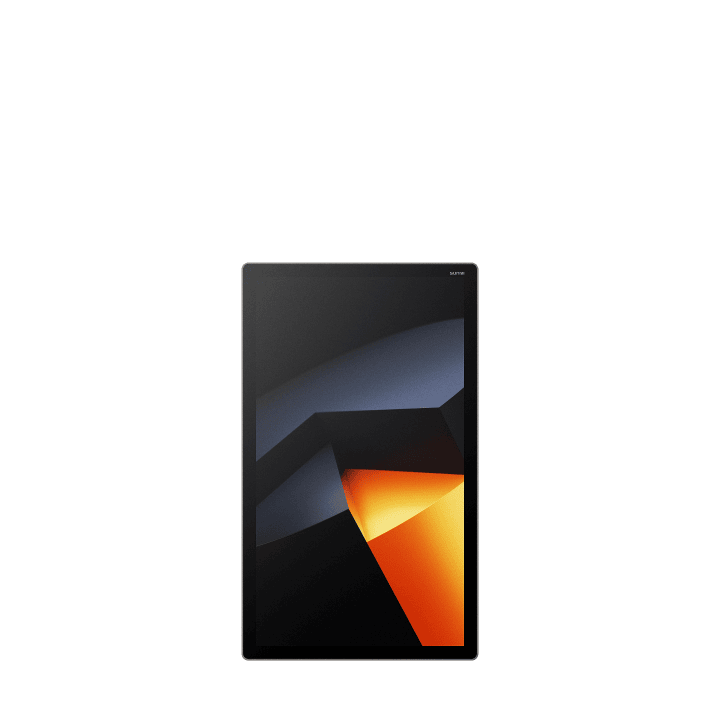
The device leaves the warehouse already enrolled in your MDM tenant, with your app installed, kiosk mode (if needed) preconfigured, and a custom boot animation that swaps out the SUNMI splash for your brand. The merchant powers on and sees your experience from the first boot. The CPad Pay is a particularly common Level 3 white-label target because the sub-display is a strong brand surface.
- Typical MOQ: zero for MDM tenant pre-config, low hundreds for custom boot animation.
- Lead time: standard (pre-staging adds 1 to 2 business days).
- Best for: every ISV and ISO program. This is the highest-leverage customization and the easiest to qualify for.
Level 4: Custom Android system image
A custom Android OS image with your branding, default app set, and any locked-down behavior. This is closer to a co-branded SUNMI build than a true OEM, but it gives you full visual and behavioral control.
- Typical MOQ: 1,000 units and up.
- Lead time: 12 to 16 weeks for first build, 4 to 6 weeks for refreshes.
- Best for: payment brands and ISVs running large multi-year programs where the hardware experience is core to the brand.
For most ISV and ISO programs in 2026, the sweet spot is Level 3: MDM tenant pre-config plus custom boot animation. It gives the merchant a fully branded experience from the first power-on without the cost or lead time of a custom Android image.
Which SUNMI devices are good white-label candidates
Not every SUNMI device is equally well suited to white-labeling. The form factors that we see most often in white-label programs are:
- Countertop POS — the V3 Mix and D3 Mini are common for restaurant and retail ISV programs. Both have clean chassis surfaces for logo placement and support sub-display branding for the customer-facing screen.
- Self-order kiosks — the K2 Mini and K2 are the most visible touchpoint for QSR and retail brands. Custom boot animation and sub-display branding turn the kiosk into a strong brand asset.
- Payment terminals — the V2s, CPad Pay, and the P3 family are the natural white-label targets for payment brands and ISOs.
- Handhelds — the P3 Mix, L2s Pro, and the L2h are common for vertical ISVs in retail, hospitality, logistics, and field service.
Custom cosmetic branding works best on chassis surfaces large enough to take a clean print or color treatment. Smaller, rounded devices sometimes accept logo placement only on a panel or back surface.

Compliance, certification, and the hidden risk in DIY white-label
A common mistake we see is a payment brand or ISV trying to white-label hardware themselves by stripping the SUNMI branding, applying custom logos in-house, and shipping. This usually breaks one of three things.
1. Hardware certifications. PCI PTS 6x certification for payment-rated devices ties to the specific chassis and label configuration submitted to the certifying body. A field modification can void the certification.
2. SUNMI warranty. The 3 year warranty on Gen 2 and Gen 3 hardware covers devices that have not been modified outside the SUNMI authorized customization path. DIY logo placement can void warranty on the affected units.
3. Regulatory labeling. US FCC and Canadian ISED labels have placement and visibility requirements. Covering or removing them creates regulatory exposure for the brand that ships the device to the merchant.
The clean path is to run cosmetic and OS-level customization through the SUNMI authorized channel. Rosper coordinates the customization spec with SUNMI, the units are built or finished to spec inside SUNMI’s authorized workflow, and certifications and warranty remain intact.
White-label use cases on SUNMI Android
Payment brand or processor ISO
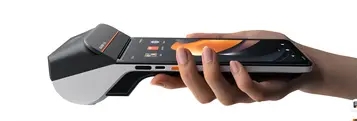
You want every merchant in your program to receive a device that looks like your hardware. Common spec: Level 2 cosmetic branding on the chassis, Level 3 MDM tenant pre-config with your payment app pre-installed, and a custom boot animation. Form factors are typically the V2s, CPad Pay, or P3 family.
Vertical SaaS ISV
You want the merchant to receive a “your brand” tablet or countertop POS with no SUNMI logo in the first-boot experience. Common spec: Level 3 MDM pre-config with your app as the default launcher, custom boot animation, and standard SUNMI chassis. Form factors are typically the V3 Mix, D3 Mini, or the K2 family for self-order. The Rosper ISV program is the natural entry point for this path.
Retail chain or franchise system
You want hardware that carries the chain brand and is locked to the chain’s POS or order app. Common spec: Level 2 cosmetic accent (color or label) plus Level 3 MDM pre-config with the chain app as the kiosk-mode default. Form factors vary by station role.
Hospitality or hotel brand
You want guest-facing devices that look like part of the hotel experience. Common spec: Level 3 MDM pre-config and custom boot animation, with the chassis often left standard because the device sits in a custom enclosure or kiosk surround.
For ISVs running multi-vertical white-label programs across both the US and Canada, our Canadian retail POS guide covers the vertical-specific device patterns that pair well with brand customization.
Lead times, pricing, and how Rosper sets up white-label programs
For US and Canadian payment brands, ISVs, and ISOs, the typical white-label program path with Rosper is:
- Scoping — share form factor preferences, volume forecast, and target customization level. We come back with a feasibility note covering MOQ, lead time, and price ranges.
- Spec lock — finalize logo placement, color, boot animation, and MDM pre-config requirements. We submit the authorized customization request to SUNMI.
- Sample build — first sample units, typically 3 to 10 devices, for sign-off.
- Production — full production run, fulfilled through Rosper’s US or Canadian warehouse depending on the merchant base location.
- Pre-staging — MDM enrollment, your app, and any merchant-specific config applied before each unit ships.
- Ongoing program — refresh runs as your volume grows, with predictable refresh lead times once the first build is in place.
Pricing for white-label programs depends on the customization level and volume. Cosmetic branding adds a per-unit premium that drops as volume rises. MDM pre-config is included for partners. Custom Android system images carry an engineering NRE charge plus per-unit premium.
For the Canadian side of a multi-region program, see our Brampton and GTA POS hardware guide for context on Ontario warehouse fulfillment and Canadian payment processor compatibility.
When white-label is not the right call
Not every program needs white-label. The honest decision tree looks like this:
- You ship under 100 units per year. Stick with standard SUNMI hardware. The unit economics of a custom branding run do not justify the spend.
- You sell to multi-vendor merchants. Merchants who run several payment or ISV stacks side-by-side are often fine with standard hardware. The branding gain is small.
- Your value sits in the software experience. If the merchant interacts with your software for 99 percent of their day, the chassis branding adds limited brand equity. MDM pre-config and a custom boot animation usually deliver enough impact at zero or near-zero MOQ.
- You need a form factor that does not exist. White-label cannot create a new device. If your use case requires a form factor SUNMI does not make, the right path is OEM, not white-label.
White-label POS hardware FAQ
What is the smallest order size for white-label SUNMI hardware?
For Level 3 MDM tenant pre-config and pre-staging, there is effectively no MOQ. For Level 1 packaging branding, 50 to 100 units is typical. For Level 2 cosmetic branding on the chassis, 200 to 500 units depending on the form factor. For Level 4 custom Android images, 1,000 units and up.
Does white-labeling void the SUNMI warranty?
Not when the customization runs through the SUNMI authorized channel via Rosper. DIY field modifications can void warranty on the affected units, which is why we recommend running cosmetic and OS-level customization through the authorized workflow.
Does white-label hardware still get PCI PTS 6x certification?
Yes, when the customization is authorized and the certified chassis configuration is not modified. The certification follows the hardware. Cosmetic branding inside the authorized workflow is designed to preserve the certified config.
Can I run a multi-tenant MDM setup on white-label hardware?
Yes. The SUNMI Partner Portal MDM supports tenant separation, so a single ISO or ISV program can manage multiple merchant tenants under one umbrella while keeping their data and policies isolated.
How fast can I get sample white-label units to evaluate?
For Level 1 and Level 3 customizations, samples can ship in 2 to 4 weeks. For Level 2 cosmetic branding, sample lead time is typically 4 to 6 weeks. For Level 4 custom Android images, the first sample build is 8 to 12 weeks.
Can a Canadian payment brand run a white-label program with US fulfillment, or do we need both?
Both. Rosper operates warehouses in both the US and Canada, including a Brampton, Ontario fulfillment center. White-label programs for cross-border brands run on a single SKU strategy with regional fulfillment to remove cross-border duty and brokerage friction.
Can I white-label SUNMI hardware and then resell to merchants outside North America?
Rosper operates as the official SUNMI distributor in North America. White-label programs we run fulfill to US and Canadian merchant bases. For deployments outside North America, the right distributor is the SUNMI regional partner in that territory.
Get a quote for your white-label program
Rosper is the official SUNMI distributor in North America. We work with payment brands, ISVs, ISOs, and vertical SaaS companies on white-label POS hardware programs across all four customization levels, with US and Canadian fulfillment, MDM pre-staging, and in-region warranty coordination. The right white-label program lets you ship a branded hardware experience without taking on OEM risk, lead time, or cost. To scope a program, get sample units, or run a volume quote, request a quote with your form-factor target, customization level, and merchant count plan.