
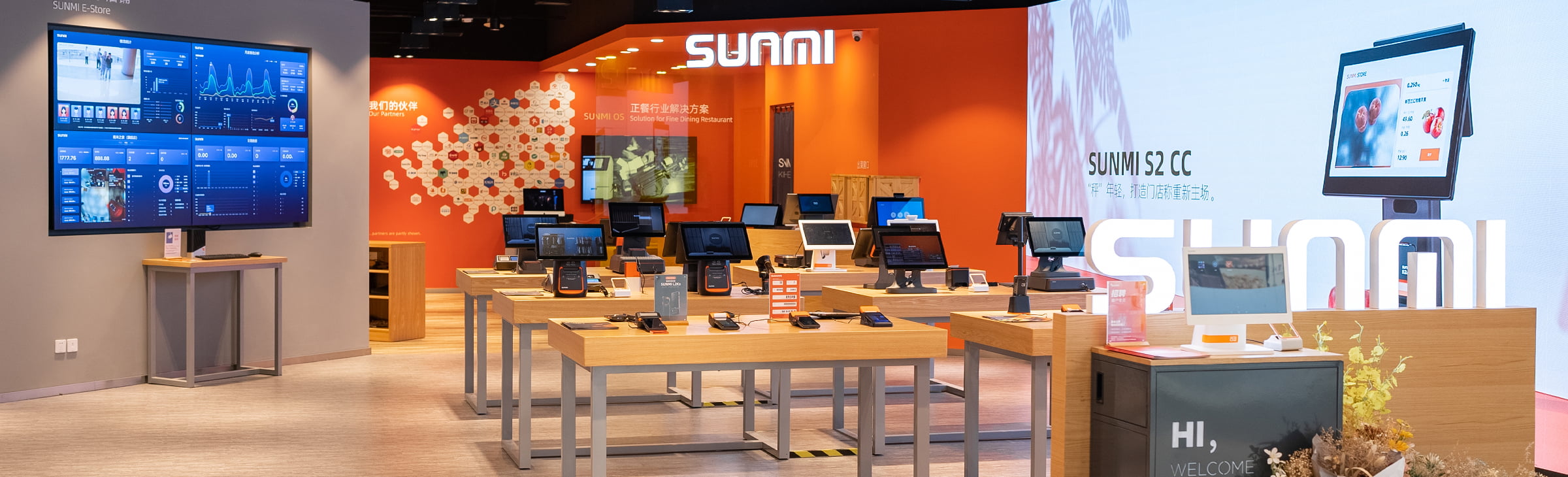
Combined fuel prepay, lottery ticket sales, tobacco and alcohol age verification, and retail checkout on the same convenience store lane is the workflow reality for the majority of US and Canada c-stores in 2026. Independent single-store operators, small regional chains (5 to 25 locations), and captive-audience convenience formats (transit hubs, base gates, campus edges, highway travel plazas) all run this multi-category, multi-workflow combined checkout as their daily baseline. This guide walks the SUNMI hardware stack that covers all four workflow categories on one integrated device family: T3 Pro at the counter, V3H handheld for lottery and inventory, K2 Mini for self-serve fuel prepay, and P3H rugged for backroom.
For Rosper customers running independent c-stores through 25-location regional chains, this guide covers the device-count math, forecourt integration path, lottery workflow, age verification pattern, self-serve fuel prepay ROI, and the warranty pattern that protects store unit economics when a peak-fuel-week hardware failure would otherwise take a lane offline.
Key takeaways
- For an independent convenience store selling fuel, lottery, and retail on the same lane in 2026, the working baseline is the SUNMI T3 Pro family counter terminal at the front register, one 2D handheld scanner on each lane for fast barcode reads, and a semi-integrated payment terminal handling EBT plus contactless plus fuel-authorization.
- For lottery ticket sales, scratch-off inventory checks, and side-counter transactions, add a SUNMI V3H handheld with the built-in scanner and NFC. It moves the cashier away from the fixed lane during peak lottery draw days without breaking the transaction chain.
- For self-serve fuel prepay in low-supervision hours or forecourt corner islands, a SUNMI K2 Mini countertop kiosk runs the prepay authorization workflow, prints a pump-assignment receipt, and hands the transaction to the fuel dispenser through the existing forecourt controller integration.
- For rugged backroom inventory receiving, cigarette carton audits, and vendor DSD deliveries, a SUNMI P3H IP65 handheld survives the walk-in cooler, the loading dock, and the 1.5-meter drop that eventually happens on the tile floor near the beer cooler.
- Age verification for lottery tickets, tobacco, alcohol, and vape products runs through the store management software on every device in the stack, with PDF417 driver license scanning replacing manual date-of-birth typing and cutting the ID-verify step from 12 seconds to under 3 seconds.
- For US-market convenience chains rolling out combined-checkout hardware, the two decisions that protect chain-level ROI are standardizing on one hardware platform across all locations and specifying a 2 to 5 business day warranty swap SLA with a US-stocking distributor holding units in 8 warehouses across the continent.
Why combined fuel plus lottery plus retail checkout is being consolidated in 2026
Three structural pressures have pushed US convenience stores to consolidate fuel, lottery, and retail checkout onto one hardware stack in 2026. First, staffing costs at c-stores have increased 18 to 30 percent since 2022 in most US labor markets, which makes the fixed-cost of multiple standalone terminals (one for fuel authorization, one for lottery, one for retail) harder to justify per lane. Second, customer transaction time has become a competitive lever as convenience customers increasingly shift ticket volume to whichever c-store on the corner moves them through the line fastest. Combined checkout that keeps one customer at one lane for all four categories cuts total transaction time by 20 to 40 percent compared to walking the customer between three separate terminals.
Third, EBT and SNAP transaction volume at convenience stores has expanded meaningfully in 2025 and 2026 as USDA FNS has widened the c-store retailer certification pathway. A c-store that wants EBT acceptance needs a payment terminal certified with an FNS-approved EBT processor. Consolidating retail and payment onto one paired counter-terminal-plus-payment-terminal setup is significantly cheaper than layering EBT on top of a fragmented three-terminal legacy stack.
The recommended SUNMI hardware stack for combined c-store checkout
Working baseline for a typical US dual-lane convenience store with 6 to 12 fuel pumps, lottery ticket sales, and standard tobacco and alcohol mix:
- Front register: one SUNMI T3 Pro family counter terminal per lane. 15.6 inch FHD Android 13 touchscreen, Qualcomm octa-core processor, integrated thermal receipt printer, and the physical footprint that fits the standard c-store counter cutout. Runs the store management software as an Android application.
- Barcode scanning: one paired 2D handheld scanner per lane. Reads PDF417 driver license barcodes for age verification, fuel pump barcodes for prepay lookup, lottery ticket barcodes, retail UPC barcodes, and coupon 2D codes.
- Payment: one paired PCI PTS certified payment terminal per lane, semi-integrated with the T3 Pro counter terminal. Handles contactless tap, EMV chip, magnetic stripe, EBT/SNAP, and fuel authorization through the store software integration to the forecourt controller.
- Lottery and side counter: one SUNMI V3H handheld with built-in scanner and NFC. Positioned for scratch-off pack activation lookup, side-counter lottery draw ticket sales during peak jackpot weeks, and mobile order-taking for stores running prepared food.
- Self-serve fuel prepay: one SUNMI K2 Mini countertop kiosk on the corner island or unattended counter. Runs the prepay authorization workflow for low-supervision hours (10 PM to 6 AM) or forecourt corner islands.
- Backroom and receiving: one SUNMI P3H IP65 rugged handheld. Survives the walk-in cooler condensation, the loading dock temperature swings, and the 1.5-meter drop on tile. Handles vendor DSD inbound, cigarette carton audits, and end-of-day cash pull reconciliation.
Why one hardware family across all four workflows. Mixed-vendor convenience store fleets (one vendor for the counter, one for handhelds, one for the kiosk, one for the rugged device) double the IT overhead per location, split the warranty pipeline across four vendors, and create integration friction every time the store software vendor ships a new build. Consolidating on the SUNMI Android family means one MDM policy, one firmware update cadence, one warranty ticket queue, and one training pattern for cashiers who rotate between the counter, the handheld, and the kiosk during a shift.
Fuel prepay and forecourt controller integration on the T3 Pro
The SUNMI T3 Pro counter terminal integrates with the forecourt controller through the store management software as an Android application. The software handles the pump authorization request, the prepay dollar amount capture, the payment authorization on the paired PCI PTS terminal, and the pump unlock signal to the forecourt controller. Common forecourt controller protocols in the US market (Ruby, Passport, and vendor-specific site controllers) all speak either a serial or IP-based protocol that the store software vendor handles as an integration on the Android application layer, not on the SUNMI hardware.
This is an important separation for c-store operators to understand. The SUNMI hardware is the application platform. The store software is the fuel integration layer. The forecourt controller is the fuel authorization broker. When the store owner changes forecourt controllers (for example after a site refresh from an aging controller to a modern IP-based controller), the SUNMI hardware does not change and the store management software vendor handles the new integration on the same T3 Pro counter terminal. This decoupling protects the hardware investment across multi-year forecourt refresh cycles.
Lottery ticket sales and scratch-off inventory workflow
State lottery ticket sales in the US are handled by the state lottery vendor terminal (Scientific Games, IGT, or the equivalent regional vendor depending on the state), which remains a separately certified device installed by the state lottery commission. The SUNMI stack does not replace the lottery vendor terminal for the actual draw ticket generation. What the SUNMI stack does is handle the retail-side workflow: recording the sale in the store management software for reconciliation, applying the customer age verification at the point of sale, printing the customer receipt with the lottery line item, and reconciling the lottery inventory (scratch-off packs) in the back-office system.
For scratch-off inventory, the SUNMI V3H handheld reads the pack activation barcode when a fresh pack is opened at the counter. The store management software marks the pack as active in inventory, and every ticket sold from that pack is decremented from the active pack count. When the pack sells out, the software flags the pack for end-of-day settlement with the state lottery. This eliminates the paper-log scratch-off reconciliation that most independent c-stores still run manually as of 2026, which consistently loses 2 to 5 percent of scratch-off gross margin to activation errors and end-of-day settlement mismatches.
For peak jackpot weeks (Powerball or Mega Millions rolls above 500 million USD, or state draw stakes above 100 million USD), the V3H handheld also functions as a side-counter overflow lottery ticket sale device. The cashier walks a mobile lottery queue with the V3H, taking orders and payment at the counter without pulling the front lane away from fuel prepay and retail. Combined with the state lottery vendor terminal handling the actual draw ticket generation, the V3H handheld cuts the peak-jackpot-week lottery queue by 40 to 60 percent compared to a single-lane-only workflow.
Age verification for tobacco, vape, alcohol, and lottery on every device in the stack
US regulation as of 2026 requires age verification for tobacco and vape products at 21 years and above (federal Tobacco 21 rule), alcohol at 21 years and above, lottery ticket sales at 18 or 21 years depending on the state, and certain restricted categories at additional thresholds. Manual date-of-birth entry at the counter runs 8 to 15 seconds per verification, and cashier error rate on manual DOB entry runs 1.5 to 3 percent, which translates directly to regulatory audit exposure and fine risk for the store.
The SUNMI stack runs PDF417 driver license barcode scanning on every device: the paired 2D scanner on the T3 Pro counter, the built-in scanner on the V3H handheld, and the paired scanner on the K2 Mini kiosk. The cashier or customer scans the ID barcode, the store software extracts the date of birth from the standardized AAMVA PDF417 data structure, validates against the category threshold, and either approves or blocks the line item. Time per verification: under 3 seconds. Error rate: below 0.1 percent (limited to barcode read failures on damaged IDs, which the software handles with a manual DOB fallback prompt).
Age verification audit log. For c-stores in jurisdictions that require electronic ID verification audit logs (most US states as of 2026 for tobacco and vape, some states for lottery), the store management software writes the verification event to the transaction record on every restricted category sale. The back-office system aggregates the log for regulatory reporting, which converts the audit response from a paper-log manual search to a database query. This is a meaningful compliance risk reduction for c-store operators facing tighter Tobacco 21 enforcement in state and city jurisdictions.
Self-serve fuel prepay on the K2 Mini countertop kiosk
The SUNMI K2 Mini 10.1 inch countertop kiosk runs the self-serve fuel prepay workflow for convenience stores that want to unlock revenue in low-supervision hours without staffing a second cashier. The math: staffing a second cashier from 10 PM to 6 AM at a typical US c-store labor rate lands at 12,000 to 18,000 USD per year. Foregoing the second cashier by relying on the primary cashier to handle both retail counter and fuel prepay creates the customer wait-time penalty that costs 5 to 12 percent of overnight fuel ticket volume as customers drive to the next c-store with a shorter line.
The K2 Mini self-serve fuel prepay workflow closes that gap. The customer walks in during low-supervision hours, taps the K2 Mini touchscreen, selects the pump number and prepay amount, taps a card or phone on the paired payment terminal, and receives a printed pump-assignment receipt. The kiosk application posts the authorization to the forecourt controller through the same store software integration used at the counter. When the pump completes below the prepay amount, the software issues an automatic refund for the unused balance to the customer payment card, matching the behavior at the staffed counter.
For c-stores running the K2 Mini self-serve prepay in late-night hours, the payback math typically lands at 4 to 8 months, driven by recapture of overnight fuel ticket volume that would otherwise walk to a competing corner. The K2 Mini kiosk also handles retail item sales (sodas, snacks, packaged food) during the same self-serve hours, with restricted category items (tobacco, alcohol, lottery) either blocked entirely or gated behind an on-site staff override.
The V3H handheld for lottery, mobile order, and side counter
The SUNMI V3H handheld covers three distinct workflows in the combined c-store checkout stack. First, scratch-off pack activation and lottery inventory lookup at the front counter (barcode scan on the pack, activation in the software, end-of-day settlement reconciliation). Second, side-counter overflow lottery ticket sales during peak jackpot weeks, running a mobile queue away from the front lane. Third, mobile order-taking for c-stores with prepared food counters (deli sandwiches, hot dogs, breakfast burritos, coffee bar) that want to capture the walk-up order before the customer reaches the front lane.
The V3H handheld also functions as the mobile age verification device when a cashier is processing a large multi-item transaction at the front lane and needs to verify a restricted category ID from the side of the counter without stopping the primary lane workflow. The built-in PDF417 scanner reads the driver license barcode, the store software validates the age, and the verification event writes to the primary transaction on the T3 Pro counter terminal. This eliminates the front-lane pause that a manual verification workflow would otherwise cause.
The P3H rugged handheld for backroom, receiving, and forecourt maintenance
The SUNMI P3H IP65 rugged handheld with 1.5-meter drop rating handles the backroom and forecourt workflow that would destroy a standard consumer-grade device inside a quarter. Vendor DSD inbound (Frito-Lay, Coca-Cola, Anheuser-Busch, and the other direct-store-delivery vendors that push most c-store inventory) requires a rugged device that survives the loading dock, the walk-in cooler, and the tile-floor drop that eventually happens on the way to the beer cooler.
For cigarette carton and case-goods inventory audits, the P3H reads the case-level UPC or 2D barcode, updates inventory in the back-office system, and flags variance against the DSD delivery slip. For end-of-day cash pull reconciliation from the fuel dispensers (for c-stores still running cash-accepting pumps), the P3H handles the drop-safe reconciliation workflow. For forecourt maintenance walk-throughs (visual inspection log, safety compliance check, fuel dispenser sticker audit), the P3H captures the walk-through as a timestamped, GPS-tagged log entry in the back-office compliance module.
Warranty, 8-warehouse coverage, and the c-store uptime math
Convenience stores run 16 to 20 hours a day, sometimes 24 hours in high-traffic locations. A lane down during a peak fuel week (Memorial Day, July 4th, Labor Day, Thanksgiving eve) is not just a lost shift, it is a permanent customer defection to a competing corner. Warranty turnaround is the operational lever that protects c-store unit economics against that risk.
Through Rosper, an authorized US-stocking SUNMI distributor, the standard SUNMI warranty covers Gen 3 hardware for 3 years, with Rosper coordinating the claim to help the store connect with SUNMI faster. Wear parts (printer heads, batteries, chargers) carry a 1-year coverage. Stock ships from 8 warehouses across the US and Canada: City of Industry CA (x2), Ontario CA, Tracy CA, The Colony TX, McLean VA, Allentown PA, and Brampton ON. Most orders arrive in 2 to 7 business days without the multi-week international freight delay that would otherwise sit a c-store on a lane-down status.
Chain-level warranty pattern. For c-store chains at 5 to 25 locations, the chain-level warranty pattern that protects unit economics: one ticket queue for all locations, standardized SLA of 2 to 5 business days from claim approval to on-site replacement stock, and a distributor-side stocked-in-country buffer that avoids the per-store international shipment delay. This is the operational separation between “we have a warranty” (paper coverage that takes weeks) and “our lanes stay open” (stocked-in-country coverage that takes days).
ROI math: combined-checkout hardware payback in 6 to 14 months
Working ROI for a typical US independent dual-lane convenience store with 8 fuel pumps, lottery, tobacco, alcohol, and standard grocery mix, doing 500 to 900 tickets per day at a 9 to 15 USD average ticket:
- Hardware capex for the full stack: 2 T3 Pro counter terminals + 2 2D handheld scanners + 2 paired PCI PTS payment terminals + 1 V3H handheld + 1 K2 Mini kiosk + 1 P3H rugged handheld + cash drawer + install. Lands in the low-five-figure range for an independent store.
- Combined checkout throughput: consolidating fuel prepay plus lottery plus retail on the same lane cuts total customer transaction time by 20 to 40 percent, which processes 15 to 25 percent more tickets per peak hour at the same staffing level.
- Self-serve prepay recapture: K2 Mini kiosk running late-night fuel prepay recaptures 5 to 12 percent of overnight fuel ticket volume that would otherwise walk to a competing corner. On an 8-pump store, that is a meaningful gross margin lift over a full year.
- Age verification error reduction: PDF417 driver license scanning cuts age-verify time from 8 to 15 seconds to under 3 seconds and cuts error rate from 1.5 to 3 percent to below 0.1 percent. Directly reduces Tobacco 21 audit exposure and fine risk.
- Scratch-off inventory accuracy: V3H handheld with pack activation eliminates the 2 to 5 percent scratch-off gross margin loss that manual paper-log reconciliation typically produces.
- Combined payback: 6 to 14 months for an independent dual-lane c-store with fuel, lottery, and retail on the same combined checkout stack.
When this stack is not the right call for your c-store
Two scenarios where the combined-checkout stack does not pencil in 2026. Very small single-lane c-stores with no fuel, no lottery, and cash-heavy mix at under 200 tickets per day typically do not process enough transaction volume to justify the full stack. In that case, a T3 Pro counter terminal plus a 2D scanner plus a paired payment terminal covers the workflow, and the V3H handheld, K2 Mini kiosk, and P3H rugged device are optional add-ons the store can adopt as ticket volume grows.
Second, c-stores where the fuel forecourt is operated by a separate branded fuel vendor (the c-store operator does not control the pump authorization, the branded fuel vendor does) may not be able to consolidate fuel prepay onto the T3 Pro counter. In that case, the fuel prepay stays at the branded fuel vendor terminal, and the SUNMI stack covers lottery, retail, and age verification only. The stack still provides significant workflow consolidation on the retail side, even without the fuel integration.
Frequently asked questions
Can one POS terminal handle fuel prepay, lottery ticket sales, and retail checkout at the same lane?
Yes. The SUNMI T3 Pro family counter terminal runs the convenience store management software as a single Android application on the same 15.6 inch touchscreen that serves the front register. When the customer walks in to prepay for a fuel pump, buy a lottery ticket, grab a soda, and add a pack of cigarettes, the cashier rings all four categories on the same terminal in one transaction. The fuel authorization posts to the forecourt controller through the store software integration, the lottery ticket prints to the lottery inventory system through the same software, the retail SKUs scan on the 2D handheld, and the age verification for the cigarette line item runs through the software on the same terminal. One customer, one lane, one terminal, one receipt.
How does self-serve fuel prepay work with a SUNMI K2 Mini countertop kiosk?
For convenience stores running self-serve fuel prepay in low-supervision hours (late night, single-cashier shifts, corner islands with no staff) the SUNMI K2 Mini sits on the countertop or islanded stand. The customer walks up, selects the pump number on the K2 Mini touchscreen, selects the prepay amount, taps a card or phone on the paired payment terminal, and receives a printed pump-assignment receipt. The K2 Mini application posts the prepay authorization to the forecourt controller, which unlocks the pump for the authorized amount. When the pump completes fueling below the prepay authorization, the store software issues an automatic refund for the unused balance to the same payment card.
Does the SUNMI hardware stack support state lottery ticket sales and scratch-off inventory?
Lottery ticket sales are handled by the state lottery terminal (a separately certified device provided by the state lottery vendor) with the SUNMI hardware acting as the retail POS that records the sale, applies the age verification, prints the customer receipt, and reconciles the lottery inventory in the back-office system. The SUNMI V3H handheld is positioned for scratch-off inventory checks (barcode scan on the scratch-off pack to verify pack activation before sale) and for side-counter lottery draw ticket sales during peak lottery draw days (large jackpot Powerball, Mega Millions, state draw) when the front lane cannot absorb the extra queue. The lottery vendor equipment stays in place; the SUNMI hardware handles the retail-side workflow.
How does age verification for lottery, tobacco, alcohol, and vape work on the SUNMI stack?
Age verification runs through the store management software on every device in the stack: the T3 Pro counter terminal, the V3H handheld, and the K2 Mini kiosk. The workflow: the cashier or customer scans the restricted product, the software flags the item as age-restricted, the cashier scans the customer ID barcode using the paired 2D handheld scanner or the built-in scanner on the V3H handheld, the software reads the PDF417 barcode on the US driver license or state ID, extracts the date of birth, validates against the regulation threshold (21 for tobacco and vape in most US states as of 2026, 21 for alcohol, 18 for lottery in most states), and either approves or blocks the line item. The verification event writes to the transaction record for regulatory audit.
How many devices does a typical dual-fuel convenience store need in the SUNMI stack?
Working baseline for a standard US dual-lane convenience store with 6 to 12 fuel pumps and typical lottery, tobacco, alcohol, and grocery mix: two T3 Pro counter terminals (one per front lane), two paired 2D handheld scanners, two paired PCI PTS certified payment terminals with EBT and contactless certification, one V3H handheld for lottery inventory and side-counter overflow, one K2 Mini countertop kiosk for self-serve prepay in low-supervision hours, and one P3H rugged handheld for backroom inventory receiving and vendor DSD deliveries. Total device count: 7 hardware SKUs across 4 device families, plus the paired payment terminals and scanners.
What warranty and shipping turnaround should a convenience chain expect from a SUNMI distributor?
Convenience store counters run 16 to 20 hours a day in high-volume locations, and forecourt hardware sees dust, heat, spilled fuel, and the occasional 1.5-meter drop on concrete. Warranty turnaround matters more here than in most retail categories. Through Rosper, an authorized US-stocking SUNMI distributor, the standard SUNMI warranty covers Gen 3 hardware for 3 years with Rosper coordinating the claim to help the store connect with SUNMI faster. Stock ships from 8 US and Canada warehouses (City of Industry CA, Ontario CA, Tracy CA, The Colony TX, McLean VA, Allentown PA, and Brampton ON), which means most orders arrive in 2 to 7 business days without the multi-week international freight delay that would otherwise take a lane offline during a peak fuel week.
Talk to a SUNMI convenience store POS specialist
Rosper is a US-stocking authorized SUNMI distributor handling convenience store POS deployments across independent single-store operators and 25-location regional chains. For a hardware quote, forecourt integration consultation, or multi-store wave install planning, contact Rosper for a c-store deployment plan.