
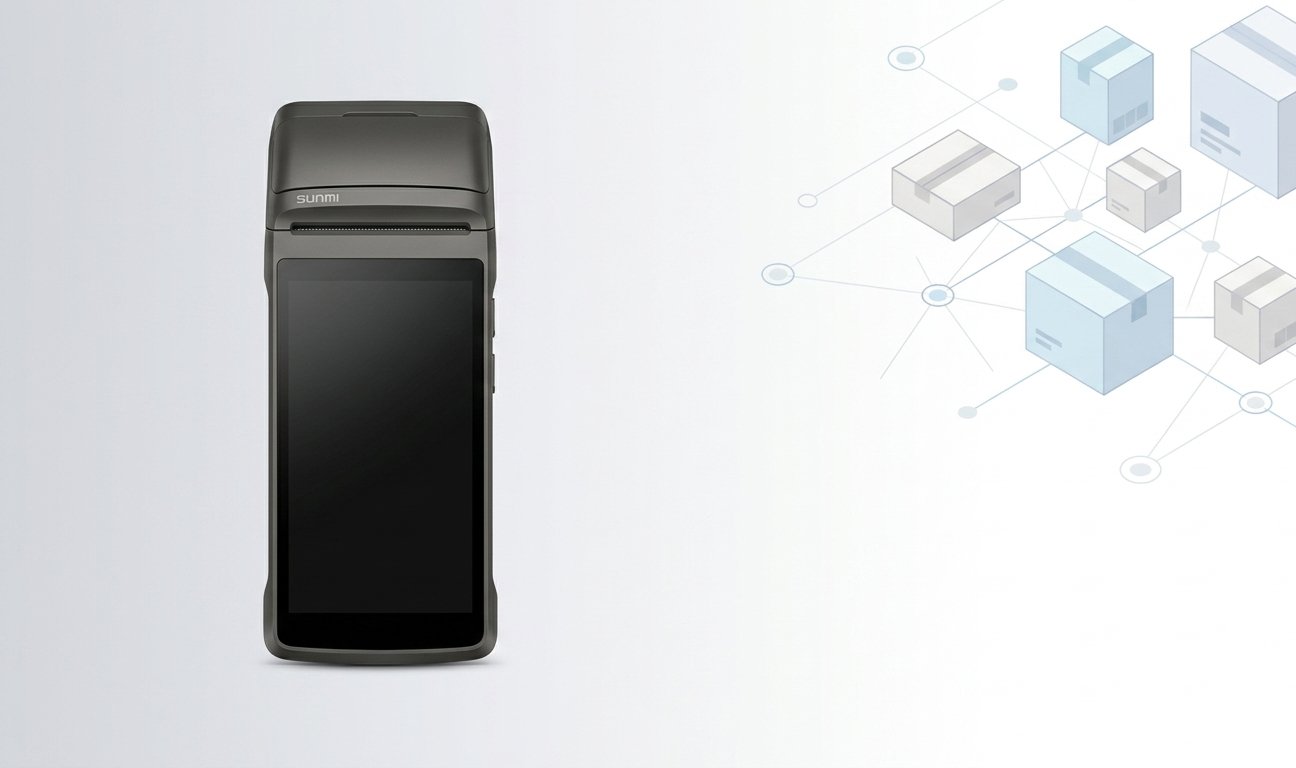
For an independent sales organization, the terminal in a merchant’s hands is your brand’s most visible touchpoint. White-label POS hardware for ISOs lets you put your own name on that device, load the payment app you want, and own the merchant relationship end to end instead of reselling someone else’s locked box. This 2026 guide explains how a payments ISO builds a branded hardware program in the United States and Canada, and what to look for in a distributor.
The direct answer up front: an ISO white-label program needs open Android terminals, a PCI-certified payment path, custom branding on the device and packaging, and a distributor that can provision and ship units across North America. Get those pieces aligned and you control margin, merchant experience, and residual retention.
Why ISOs move to white-label hardware
An ISO earns on residuals, so anything that reduces merchant churn protects revenue. A branded terminal does that in two ways. It keeps your name in front of the merchant every day, and it makes switching processors harder because the hardware is tied to your program rather than to a single acquirer.
Processor-locked terminals work against you here. When the device belongs to someone else’s ecosystem, the merchant sees that brand, not yours, and a competitor can lift the account by swapping a box. Open hardware flips that dynamic in your favor.
White-label hardware also lets you package a full solution. Instead of quoting a bare terminal, you sell a branded device, your payment app, and your support line as one product, which raises perceived value and defends your rate.
There is a support benefit too. When the terminal is yours, your team controls the software image, the update schedule, and the troubleshooting flow, so you are not waiting on a third party to fix a merchant issue. That control shortens resolution times and keeps the merchant experience tied to your name rather than to an outside vendor.
The building blocks of a white-label POS hardware program
A branded terminal program is more than a logo on a screen. It is a stack of hardware, certification, branding, and logistics decisions that have to line up before the first merchant goes live.
| Building block | What it involves |
|---|---|
| Open Android terminals | Devices that let you load your own or a partner payment app |
| PCI-certified payment path | Certified hardware and a secure SDK for card entry and tap |
| Device branding | Boot logo, custom UI, and branded packaging |
| Provisioning and MDM | Pre-loaded apps, remote configuration, and fleet management |
| North American fulfillment | Local stock, fast shipping, and warranty support |
The open Android requirement sits at the base of everything. It is what lets you load your payment application, apply your branding, and manage the fleet remotely. A closed device blocks all three, which is why processor-locked hardware is a poor foundation for a white-label program.
Payment certification: what an ISO has to get right
Payments carry rules that general retail hardware does not, and getting them wrong stalls a launch. The two that matter most for a white-label ISO are device certification and how your app talks to the card reader.
PCI PTS and the payment path
A terminal that captures card data has to use PCI PTS certified hardware for the secure entry of card and PIN information. SUNMI produces payment devices with PCI-certified secure hardware, so the certified path exists at the device level and you build your experience on top of it.
You still confirm PCI DSS obligations for your own systems and merchants, and you validate your integration against your processor’s and the card networks’ requirements. The device certification is the foundation, not the whole compliance picture. You can review current PCI standards at the PCI Security Standards Council site.
Semi-integrated versus fully integrated
Most modern ISO programs use a semi-integrated model, where the payment application handles the sensitive card data inside the certified boundary and your business app never touches it. This keeps your app and your merchants out of the toughest parts of PCI scope, which is a real cost and time saving.
An open Android terminal supports this cleanly. Your branded business app runs alongside a certified payment app, they exchange only non-sensitive transaction data, and the secure element does the rest.
Branding the device without touching compliance
Branding is where white-label pays off, and most of it can be done without disturbing the certified payment path. You control the parts the merchant sees every day while the secure layer stays intact.
At the software level, you set a custom boot logo, a branded home screen, and your own launcher and support prompts. At the physical level, you can add branded packaging and printed collateral so the unboxing carries your name. The result looks and feels like your product from the first power-on.
Because the payment app remains certified and unchanged, your branding work never puts certification at risk. You are theming the experience, not modifying the secure hardware.
Provisioning a fleet at scale
Selling ten terminals is easy. Selling a thousand and keeping them configured, updated, and supported is where programs succeed or fail. Provisioning is the operational core of a white-label ISO program.
Open Android hardware supports remote device management, so you can pre-load your payment app and branded launcher, push configuration, and update the fleet without touching each unit. Zero-touch style enrollment lets a merchant power on a terminal and have it configure itself against your program.
A distributor can take this further by staging and kitting devices before they ship, so a merchant receives a terminal that is already branded, enrolled, and ready to transact. That drop-ship model is what lets a lean ISO scale without a warehouse of its own.
How Rosper supports white-label POS hardware programs
Rosper is an official SUNMI distributor for North America, which puts the full SUNMI terminal lineup, including PCI-certified payment devices, inside reach of an ISO program. The open Android platform gives you the branding, app-loading, and fleet-management control this guide describes.
Rosper works with payment resellers on tiered wholesale pricing, device staging, and North American fulfillment, and the team can walk through provisioning options before you commit. You can see how the partner track is structured on the Rosper ISO partner page and browse the current hardware on the products page.
For SUNMI device background and payment product details, the SUNMI official site is the authoritative reference.
Launching your branded terminal program
Once the hardware, certification, branding, and provisioning are aligned, the launch comes down to fulfillment. This is where local stock decides whether merchants wait days or weeks to start transacting.
Rosper stocks SUNMI hardware in warehouses across the US and Canada, including a Canadian facility in Brampton, Ontario, with most orders arriving in 2 to 7 business days. Devices carry SUNMI’s manufacturer warranty, up to three years on current-generation hardware, and Rosper assists with any warranty claims. To scope a branded terminal program, share your expected volume and preferred models on the request a quote page.
Frequently asked questions
What is white-label POS hardware for an ISO?
White-label POS hardware for an ISO is a payment terminal that carries the ISO’s branding rather than a processor’s, running the ISO’s chosen payment app on open Android. It lets an independent sales organization own the merchant relationship, defend residuals, and package hardware, software, and support as a single branded product.
Do I need PCI certification to run a white-label terminal program?
The terminal itself must use PCI PTS certified secure hardware for card and PIN entry, and SUNMI payment devices provide that certified path. You still confirm your own PCI DSS obligations and validate your integration with your processor and the card networks, but the device certification is the foundation you build on.
Can I brand a payment terminal without breaking its certification?
Yes. You can set a custom boot logo, branded launcher, and branded packaging while the certified payment application and secure hardware stay unchanged. Because branding only themes the experience and never modifies the secure payment path, it does not put device certification at risk.
How do ISOs provision hundreds of terminals efficiently?
Open Android terminals support remote device management, so an ISO can pre-load its payment app and branded launcher, push configuration, and update the whole fleet without handling each unit. A distributor can stage and kit devices before shipping, so merchants receive terminals that are already branded, enrolled, and ready to transact.
Why is open Android better than a processor-locked terminal for an ISO?
Open Android lets an ISO load its own payment app, apply its branding, and manage the fleet remotely, none of which a processor-locked device allows. It keeps the ISO’s brand in front of the merchant and makes the account harder for a competitor to lift, which protects residual revenue.
How does Rosper support an ISO white-label program in North America?
Rosper is an official SUNMI distributor offering tiered wholesale pricing, device staging, and fulfillment from warehouses across the US and Canada, including a Brampton, Ontario facility, with most orders arriving in 2 to 7 business days. Devices carry SUNMI’s manufacturer warranty, up to three years on current-generation models, with Rosper assisting on claims.