
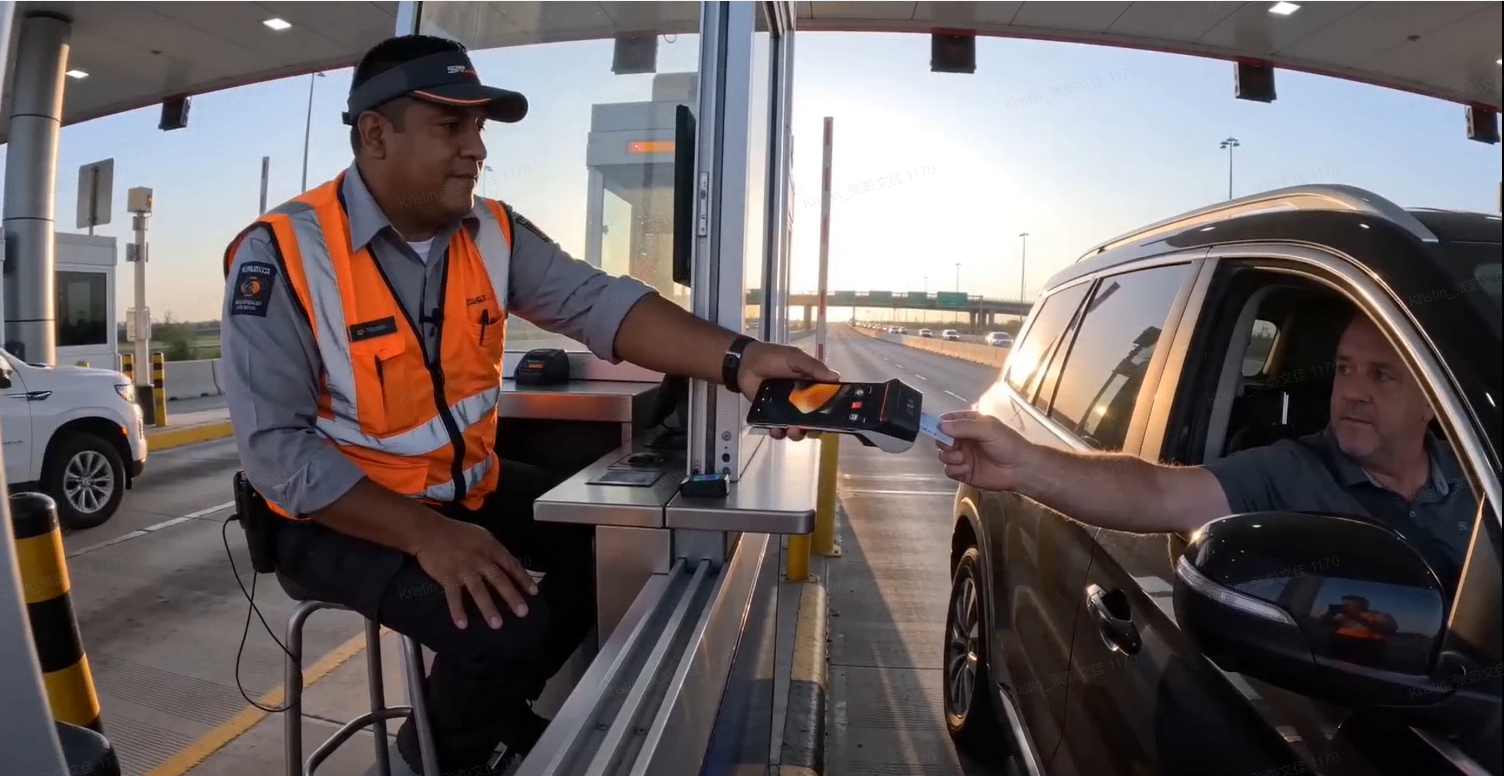
Choosing parking POS hardware in 2026 is a different problem from picking a countertop terminal for a store. A parking revenue control systems (PRCS) provider, a lot operator, or a mobility software vendor has to accept payment at unattended pay stations, in staffed booths, and from roving attendants, often outdoors, on power and network that a retail counter never has to worry about. This guide frames the hardware decision for a parking operator or the ISV building the app that runs on it.
The short answer: build a parking payment program on Android POS hardware in three form factors, an unattended kiosk for self-serve pay stations, a compact desktop terminal for attended booths, and a rugged handheld for roving enforcement or valet. Rosper is the authorized SUNMI distributor for North America, stock ships from eight US and Canadian warehouses, and most orders arrive in 2 to 7 business days.
Key Takeaways
- A parking program needs three device roles, self-serve kiosk, attended booth terminal, and roving handheld, rather than one terminal type stretched across every lane.
- Open Android hardware lets a PRCS provider deploy its own parking app directly, so the terminal runs the operator’s rate logic, LPR handoff, and payment flow instead of a locked vendor stack.
- PCI PTS certified payment SKUs handle card-present tap and chip at the pay station, while a semi-integrated SDK keeps the operator’s app out of PCI scope.
- An MDM manages an unattended fleet remotely, so a stalled pay station is a same-day remote reboot or reconfigure rather than a truck roll.
- Current-generation devices carry a 3 year hardware warranty coordinated in North America, and most orders arrive in 2 to 7 business days from eight regional warehouses.
Why Parking POS Hardware Is a Three-Device Problem
A parking site rarely has one point of payment. Drivers pay at a self-serve station on entry or exit, an attendant takes payment in a staffed booth during peak hours, and enforcement or valet staff move through the lot on foot. Trying to serve all three with a single device type either overbuilds the roving role or underbuilds the unattended one. The practical approach is to match a form factor to each role and standardize on one Android platform underneath so the operator’s app, management tooling, and warranty stay consistent across the whole site.
Standardizing the platform matters more than it looks. When every device role runs the same Android build, the PRCS provider ships one app, one configuration profile, and one update pipeline to kiosks, booth terminals, and handhelds alike. That is the difference between managing a parking estate and firefighting a pile of mismatched hardware.
Unattended Kiosk Hardware for Self-Serve Pay Stations
The self-serve pay station is the workhorse of an unattended lot. It has to take payment without staff present, survive a public setting, and recover on its own when the network hiccups. A self-order kiosk chassis running the operator’s parking app covers this role, presenting rate entry, plate lookup, and payment on one screen. For lots without wired networking, an LTE-ready configuration removes the trenching and cabling that often stalls a deployment.
Because the station is unattended, remote management is not optional. An MDM plan lets the operator reboot, reconfigure, or re-image a station remotely, so an overnight fault is cleared before the morning rush instead of triggering a service visit. Rosper provides free MDM setup with the hardware, which keeps the management layer from becoming a separate line item. To scope kiosk options, see the SUNMI product range.
Booth and Handheld Parking POS Hardware
The attended booth needs a compact desktop terminal an attendant can run for a full shift, taking payment and printing a receipt or validation without a bulky legacy till. A small all-in-one Android terminal fits a cramped booth and keeps the same app the kiosks run.
The roving role, enforcement, valet, or overflow event parking, needs a rugged handheld with all-day battery, a built-in scanner for permits or plates, and optional built-in printing for on-the-spot tickets or receipts. A mobile Android POS terminal covers this without a separate reader. Because it runs the same platform as the fixed devices, staff move between roles without relearning a new tool.
| Parking role | Hardware form factor | What it solves |
|---|---|---|
| Self-serve pay station | Unattended self-order kiosk, LTE-ready | 24/7 payment with no staff, remote recovery |
| Attended booth | Compact all-in-one desktop terminal | Fast attendant checkout in tight space |
| Enforcement and valet | Rugged handheld with scanner and battery | Mobile payment, permit scan, on-spot receipt |
Payments, PCI Scope, and the Operator App
Card payment at a parking station is where certification matters. A PCI PTS certified payment terminal handles card-present tap and chip at the point of payment, and a semi-integrated payment SDK lets the operator’s parking app trigger the transaction while card data stays inside the certified hardware. That design keeps the PRCS provider’s application out of PCI scope, which is the outcome a compliance team wants to hear.
Open Android hardware is what makes this work for a software-led operator. Instead of accepting a locked vendor terminal, the PRCS provider installs its own app, its own rate engine, and its own LPR or gate integration directly on the device. The hardware becomes a neutral platform for the operator’s software rather than a competing stack. For teams building the app, an integration conversation up front confirms the right payment SKU for the target acquirer.
Sourcing and Fleet Rollout for Parking POS Hardware
A parking estate is a fleet, not a single purchase, so sourcing should be built for staged rollout. Buying through an authorized distributor preserves the Google and PCI certifications and the manufacturer warranty across every unit, and holding stock in regional warehouses keeps lead times predictable as sites come online in phases. For multi-site programs, bulk ordering stages devices to the rollout calendar instead of one order at a time.
Budget the program around four line items. Hardware for each device role and its peripherals. Warranty, already included at 3 years on current-generation devices rather than a paid add-on. Device management, since an MDM is required to run unattended stations. And a spare pool sized to the estate, so a failed pay station is a same-week swap rather than a dark lane. Framing it this way keeps the operator’s cost model honest as sites scale.
Source Parking POS Hardware from Rosper
Rosper is the authorized SUNMI distributor for North America, supplying parking operators and PRCS providers from eight US and Canadian warehouses. We stock the full SUNMI Android lineup across kiosk, desktop, and handheld form factors, coordinate the SUNMI 3 year warranty locally, and include free MDM and deployment consulting, whether the program is a single lot or a regional estate. Most orders arrive in 2 to 7 business days. To scope hardware, payment SKUs, and a rollout plan for your parking program, request a quote.
Frequently Asked Questions
What parking POS hardware does an unattended pay station need?
An unattended parking pay station needs a self-order kiosk chassis running the operator’s parking app, ideally in an LTE-ready configuration so it works on lots without wired networking. Because it runs without staff, it also needs remote MDM management so a fault can be cleared without a service visit.
Can a PRCS provider run its own app on the hardware?
Yes. Open Android POS hardware lets a parking revenue control systems provider install its own rate engine, plate-lookup, and payment flow directly on kiosks, booth terminals, and handhelds, rather than accepting a locked vendor stack. The hardware acts as a neutral platform for the operator’s software.
How does card payment stay PCI compliant at a parking station?
Use a PCI PTS certified payment SKU and a semi-integrated payment SDK. The operator’s app triggers the transaction while card data stays inside the certified hardware, which keeps the parking application itself out of PCI scope. Confirm the exact certification for the target acquirer at quote time.
How are unattended parking terminals managed remotely?
A mobile device management (MDM) platform lets an operator reboot, reconfigure, or re-image an unattended station remotely, so an overnight fault is cleared before peak hours instead of triggering a truck roll. Rosper provides free MDM setup with the hardware.
How fast can a parking operator get SUNMI hardware in North America?
Stock ships from eight US and Canadian warehouses, and most orders arrive in 2 to 7 business days. Single-unit pilots and phased fleet batches ship on the same domestic lead time, and current-generation devices carry a 3 year hardware warranty coordinated in North America.