
ISOs, VARs, and payment resellers source SUNMI wholesale POS hardware through an authorized distributor, which sets tiered volume pricing, defines realistic minimum order quantities, and fulfills most orders in 2 to 7 business days from eight North American warehouses. This 2026 guide breaks down how wholesale POS hardware pricing actually works, what MOQs to expect, the lead times you can plan around, and why the authorized channel beats grey-market or direct-import sourcing for anyone reselling at volume in the United States and Canada.
Yes, an ISO or VAR can buy SUNMI POS hardware at genuine wholesale pricing. The short answer is that pricing drops as committed volume rises, MOQs are modest for standard models, and an authorized North American distributor gives you local stock, a real warranty path, and support that a factory-direct or grey-market order cannot match.
Wholesale POS hardware: Key takeaways
- Tiered pricing rewards commitment. Unit cost falls as your annual and per-order volume climbs, so the resale margin you plan around should assume a tier, not a single spot price.
- MOQs are lower than most resellers expect. Standard Android POS models often start at tens of units, with deeper discounts and custom options unlocking at hundreds of units.
- Lead times are a North American advantage. Rosper stocks SUNMI wholesale POS hardware in eight US and Canada warehouses, so most orders arrive in 2 to 7 business days rather than the weeks a factory import takes.
- The authorized channel protects your margin and your reputation. Warranty coverage, local stock, and support come with authorized distribution and disappear with grey-market gear.
- US and Canada are served equally. Canadian resellers get the same tiered pricing, warranty coordination, and fast fulfillment, including a Brampton, Ontario site, as US partners.
How wholesale POS hardware pricing works for ISOs and VARs
Wholesale POS hardware pricing is not a single sticker number. It is a tiered structure where the per-unit cost you pay depends on how much you commit to, both on a single purchase order and across a rolling annual volume. The more you move, the lower each unit costs, and the more your resale margin has room to breathe.
For an ISO or VAR, this matters because your business model is built on the spread between what you pay for the hardware and what you charge the merchant, whether you sell it outright, bundle it with a processing agreement, or place it as part of a subscription. A tier improvement of even a few percent per unit compounds fast across a fleet.
Volume pricing on wholesale POS hardware typically scales along two axes at once. The first is the size of the individual order, since larger single shipments cut per-unit logistics and handling cost. The second is your committed annual volume, which lets a distributor forecast stock and pass savings back to reliable partners.
The practical takeaway is to negotiate on your real trajectory, not just your first order. A reseller planning to place 40 units now but 400 over the year should price the relationship on the annual figure, because that is what unlocks the better tier and the custom options that come with it.
Tiered volume pricing structure for wholesale pos hardware
The table below shows how a typical tiered wholesale structure behaves for wholesale POS hardware. Exact numbers depend on the model and your agreement, but the shape holds across the SUNMI lineup Rosper stocks for North America.
| Tier | Indicative volume band | Relative unit price | What typically unlocks |
|---|---|---|---|
| Entry | Tens of units per order | Baseline wholesale | Standard models, standard packaging, distributor warranty coordination |
| Growth | Low hundreds per year | Lower than baseline | Better per-unit pricing, priority stock allocation, pre-staging options |
| Scale | Committed higher annual volume | Lowest per-unit | Best pricing, custom configuration, reserved safety stock, planning support |
Read this as a direction of travel rather than a fixed rate card. The point for an ISO or VAR sourcing wholesale POS hardware is that each step up in commitment lowers cost and adds capability, from simple pricing at entry to reserved stock and configuration control at scale.
MOQ realities: what minimums to expect
Minimum order quantity is the number most new resellers overestimate. For standard SUNMI Android POS models held in North American stock, MOQs are modest, often starting in the tens of units rather than the hundreds a factory-direct order would demand.
MOQ climbs when you ask for something non-standard. Custom firmware images, branded boot screens, custom packaging, or a specific SKU configuration all raise the minimum because they commit the supply chain to a bespoke run. This is the same reason deeper white-label branding ties to higher volume.
There is also a difference between the MOQ to open an account and the MOQ to hit a pricing tier. You can often start with a small qualifying order to validate fit, then grow into the volume band that earns the better per-unit rate. A good distributor will structure this so you are not forced to over-buy on day one.
For resellers who mix models, remember that MOQs usually apply per SKU. A pilot that spreads ten units each across four different terminals may not clear the same tier as forty units of one model, so consolidating your first wholesale POS hardware orders around a lead device is often the smarter sourcing move.
Lead times from eight North American warehouses
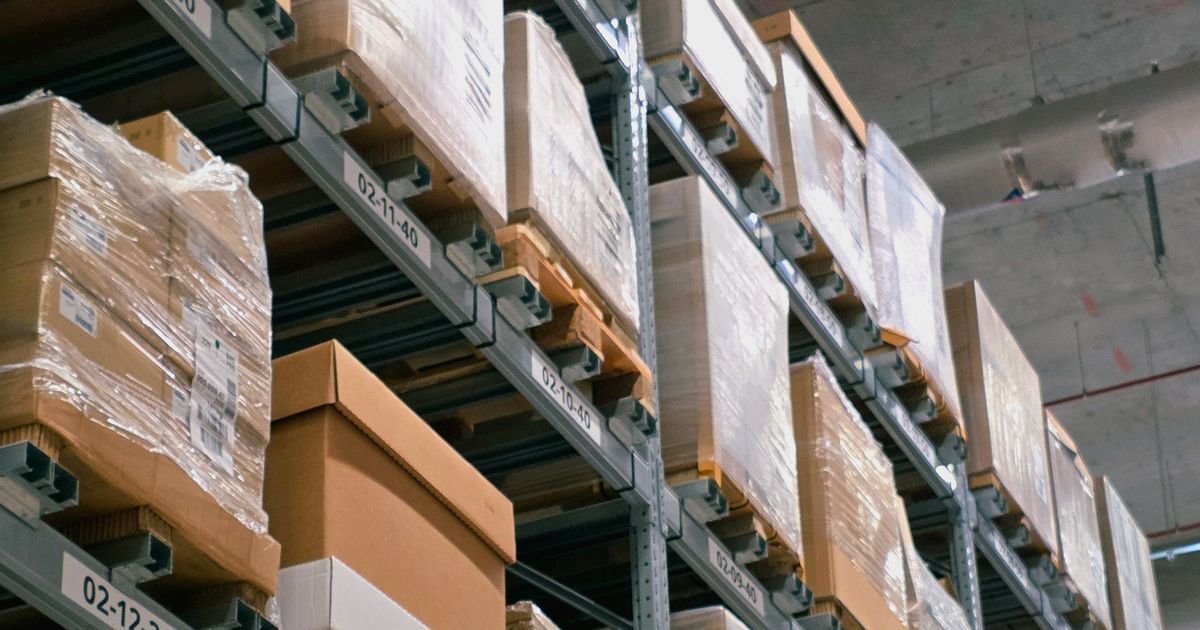
Lead time is where the authorized North American channel separates itself most clearly from importing direct. Rosper stocks SUNMI wholesale POS hardware in eight warehouses across the United States and Canada, so most in-stock orders arrive in 2 to 7 business days.
Warehouse locations, stocked categories and dispatch cut-offs are set out in the distributor reference page.
Compare that to a factory-direct import, where you are looking at production scheduling, ocean or air freight, customs clearance, and last-mile delivery. That path can stretch to many weeks, and it puts your working capital and your merchant commitments at the mercy of a container schedule.
For an ISO or VAR, predictable lead time is not a convenience, it is a revenue lever. When a merchant signs, the clock starts on activation and processing revenue. Local stock of wholesale POS hardware means you can promise a deployment date and keep it, instead of telling a new account to wait a month for hardware.
Canadian resellers get the same benefit. Domestic Canadian stock, including a Brampton, Ontario site, avoids cross-border customs delays and brokerage friction, so a merchant in Toronto or Vancouver is served on the same fast timeline as one in Texas.
Authorized distributor vs direct import vs grey market
Resellers sourcing at volume generally weigh three channel types. Naming them by type rather than by vendor keeps the comparison clean: the authorized distributor channel, the direct-from-factory import channel, and the grey market. Each has a very different risk and cost profile.
| Factor | Authorized distributor | Direct-from-factory import | Grey market |
|---|---|---|---|
| Unit price at low volume | Competitive wholesale, tiered | Low unit but high all-in cost | Variable, sometimes cheap |
| Local stock | Yes, North American warehouses | No, produced to order | Inconsistent |
| Lead time | 2 to 7 business days in stock | Weeks, plus customs | Unpredictable |
| Warranty | SUNMI warranty, distributor coordinated | Complex, cross-border claims | Often none or void |
| Support | North America based | Limited, time-zone gaps | None |
| Firmware and compliance | Region-correct, GMS where applicable | Region risk on config | Region and authenticity risk |
The direct-import channel can look cheapest on the raw wholesale POS hardware unit price, but the all-in cost tells a different story once you add freight, customs, currency exposure, financing tied up in a long lead time, and the burden of running warranty claims across a border yourself.
The grey market is where reputation risk lives. Units may carry the wrong regional firmware, lack a valid warranty, or arrive without the certifications your merchants and their processors expect. For an ISO or VAR whose name is on the deployment, a grey-market failure is your problem, not the seller’s.
The authorized distributor channel is the balance point for a serious reseller. You get tiered wholesale POS hardware pricing, local stock, a genuine warranty path, and support, all of which protect the margin and the merchant relationship that your business actually runs on.
Why the authorized channel protects your warranty and stock
Warranty is the clearest reason the authorized channel wins for volume resellers. SUNMI provides the hardware warranty, and Rosper coordinates the claim, the RMA logistics, and the replacement shipment inside North America. Current Gen 2 and Gen 3 devices carry a 3 year SUNMI warranty, with wear parts such as print heads and cutters covered for 1 year.
That coordination matters at scale. When you have hundreds of units in the field, you need a predictable RMA path and local replacement stock, not a cross-border shipping saga every time a device fails. The authorized channel turns warranty from a liability into a service you can promise your merchants.
Local stock is the second protection. Because Rosper holds inventory in North America, a reseller can request a safety-stock reserve at the nearest warehouse for zero-downtime swaps. A merchant whose terminal dies on a Friday does not wait for a container, they get a replacement inside the same fast window.
Finally, the authorized channel guarantees region-correct configuration. Devices ship with the right regional firmware and, where applicable, GMS certification, so your merchants get hardware that behaves the way their software and payment processors expect on day one.
A wholesale sourcing checklist for resellers
Use this checklist to qualify a wholesale POS hardware source before you commit capital to a first order.
- Confirm authorized status. Verify the supplier is an authorized SUNMI distributor for North America, not a reseller of grey-market units.
- Map your annual volume, not just order one. Price the relationship on your rolling trajectory so you land in the right tier from the start.
- Check the MOQ per SKU. Consolidate early orders around a lead device to clear a pricing tier faster.
- Verify local stock and warehouse coverage. Confirm inventory is held in North America, including Canadian stock if you sell north of the border.
- Nail down lead time in writing. Ask for the in-stock fulfillment window and any pre-staging turnaround.
- Understand the warranty path. Confirm who provides the warranty, who coordinates RMAs, and where replacement stock sits.
- Ask about pre-staging. MDM enrollment, app preloading, and kiosk lockdown before shipment save you deployment labor per unit.
- Plan for growth. Confirm you can move up tiers and add custom configuration as your fleet scales.
A source that passes every line on this list will protect both your margin and your merchant relationships as you scale. To go deeper on selling and partnering, see our ISO partner guide to selling POS hardware and the SUNMI payment terminal ISO partner guide. For hardware that carries your own brand, read the white-label POS hardware guide.
How to open a wholesale account with Rosper
Rosper is the authorized SUNMI wholesale POS hardware distributor for North America, serving the United States and Canada equally from eight warehouses. Opening a wholesale account is a short process built for resellers who want to move quickly.
- Share your model and volume. Tell Rosper whether you are an ISO, VAR, or payment reseller, your target devices, and your expected annual volume.
- Confirm your pricing tier. Rosper maps your trajectory to a tier and confirms MOQs and any custom options.
- Place a qualifying order. Validate fit with an initial order, with pre-staging if you want units deployment-ready.
- Scale on local stock. Grow volume, move up tiers, and reserve safety stock as your fleet expands.
For current wholesale POS hardware pricing, MOQ confirmation, and lead times for your market in the United States or Canada, browse the Android POS hardware catalog and open a conversation through the Rosper wholesale quote form. Distributor authenticity can be confirmed against the manufacturer directly on the official SUNMI site.
Wholesale POS hardware FAQ
What is the minimum order to buy SUNMI POS hardware at wholesale?
For standard SUNMI Android POS models held in North American stock, MOQs are modest and often start in the tens of units. Custom firmware, branded boot screens, or bespoke packaging raise the minimum because they commit the supply chain to a custom run. Rosper confirms the exact MOQ per model during onboarding.
How does tiered volume pricing work for ISOs and VARs?
Per-unit cost falls as your committed volume rises, measured both per order and across a rolling annual figure. Resellers should price the relationship on their annual trajectory, not just the first order, because that is what unlocks the better tier and custom configuration options.
How fast can a wholesale POS hardware order ship in the US and Canada?
Most in-stock orders arrive in 2 to 7 business days. Rosper stocks SUNMI hardware in eight warehouses across the United States and Canada, including a Brampton, Ontario site, so Canadian resellers avoid cross-border customs delays.
Why source through an authorized distributor instead of importing direct?
An authorized distributor gives you local stock, fast lead times, a genuine SUNMI warranty coordinated in North America, region-correct firmware, and local support. Direct import can show a lower unit price but adds freight, customs, currency risk, long lead times, and cross-border warranty complexity.
Who provides the warranty on wholesale SUNMI POS hardware?
SUNMI provides the hardware warranty and Rosper coordinates claims, RMA logistics, and replacement shipment inside North America. Current Gen 2 and Gen 3 devices carry a 3 year SUNMI warranty, with wear parts such as print heads and cutters covered for 1 year.