
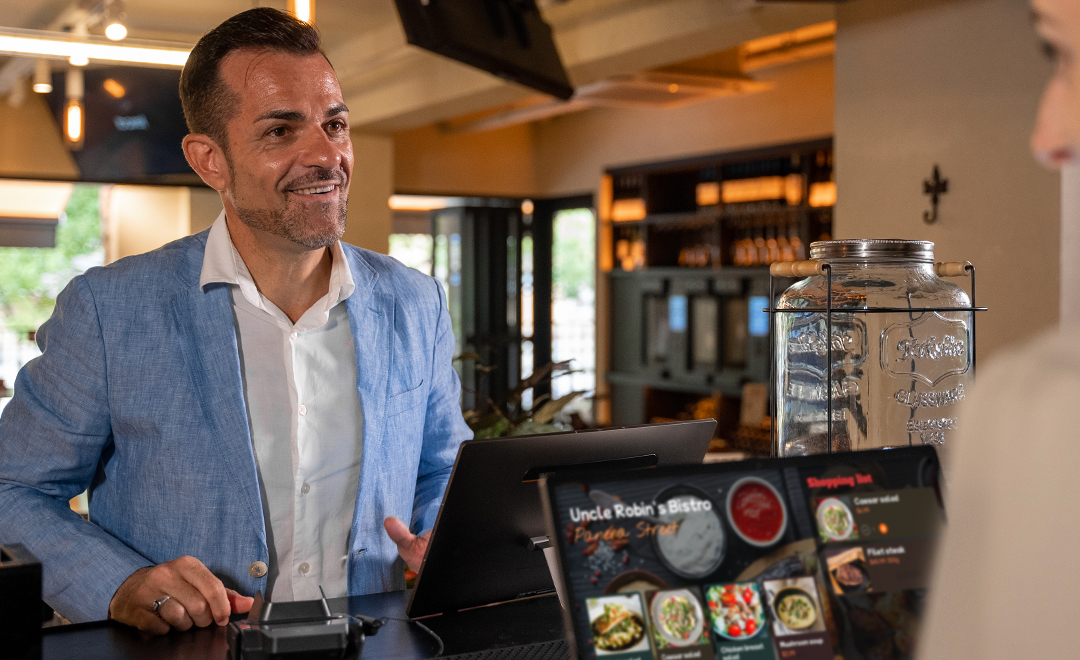
An all-in-one POS terminal is now the default countertop hardware choice for independent restaurants opening or replacing gear in 2026. According to the National Restaurant Association 2026 State of the Restaurant Industry report, 60 percent of operators plan to invest more in technology this year, with over half targeting front-of-house productivity and efficiency upgrades. Bundled hardware is where those dollars land first.
SUNMI already ships to 1.5 million+ merchants worldwide, and Rosper Technology stocks the full SUNMI all-in-one POS terminal catalog across 8 North American warehouses with 2 to 7 day delivery.
Yet most independent restaurant owners walk into the purchase with the wrong shortlist. They compare price tags across four separate boxes instead of one integrated device, or they buy a locked-down POS hardware bundle that forces a monthly software subscription for life.
This 2026 buyers guide is written for owners of 1 to 3 location cafes, bistros, coffee shops, and quick-service restaurants. The kind of operator who wants one unit on the counter, one bill of materials, and freedom to run the restaurant software they actually like. If you run more than three sites, pair this with our multi-location POS hardware guide.
We cover what all-in-one really means, when it beats a modular POS hardware stack, the seven specs that matter, and the four SUNMI all-in-one POS terminal models Rosper Technology sells in North America. Every recommendation is anchored to real payment adoption data and Rosper’s field experience supporting independent restaurant deployments across North America.
All-in-one POS terminal: Key takeaways
- All-in-one bundles four devices into one. Display, thermal receipt printer, cash drawer port, and payment reader in a single countertop unit. Fewer cables, less counter space, one warranty ticket when something fails.
- Contactless is now table stakes. NFC coverage is projected to exceed 93 percent of retail terminals by 2026, and 68 percent of limited-service restaurant customers prefer contactless. Any 2026 POS terminal purchase must include EMV chip and NFC tap.
- Screen size drives the shortlist. Compact 10.1 inch for tight cafe counters, 15.6 inch for standard restaurant counters, 15.6 inch plus customer display for full-service or high-average-ticket concepts.
- Android openness matters more than brand. Rosper’s SUNMI all-in-one POS terminal lineup runs Loyverse POS, Petpooja, Fresh KDS, and custom Android restaurant apps side by side. No forced monthly software subscription, no vendor lock-in.
- Warranty and warehouse location decide day-2 experience. Rosper stocks all four models in 8 North American warehouses with 2 to 7 day delivery and a 3-year SUNMI hardware warranty on Gen 2 and Gen 3 devices.
What is an all-in-one POS terminal
An all-in-one POS terminal is a countertop POS device that integrates the four hardware pieces a restaurant normally buys separately. The touchscreen display, the thermal receipt printer, the cash drawer trigger port, and the EMV plus NFC payment reader all live inside one enclosure with one power cable.
The alternative is a modular POS hardware setup. Owners buy a tablet or monitor, a separate 80mm thermal printer, a stand-alone cash drawer, and a payment terminal from the payment processor. Each piece has its own power brick, its own cable, and its own support number when it breaks.
The all-in-one POS terminal was uncommon in restaurants a decade ago because payment certification was locked to card-processor-specific pinpads. That barrier is gone. As QSR Magazine noted in its 2026 restaurant trends coverage, restaurants are consolidating ordering, payments, loyalty, and kitchen workflows into fewer platforms rather than assembling patchwork stacks.
An all-in-one POS terminal in 2026 typically includes a 10.1 to 15.6 inch main touchscreen, an 80mm thermal receipt printer with auto-cutter, an RJ11 cash drawer port, NFC contactless reader, EMV chip slot, and an Android or Android-based operating system with LAN, Wi-Fi, and optional 4G.
When to choose all-in-one vs modular POS hardware
All-in-one is the right call for the majority of independent restaurants with 1 to 3 locations, average ticket under $80, and one to three checkout stations per location. Counter space is finite, install has to happen in a weekend, and the owner is the person who calls support when a printer jams.
Modular POS hardware still makes sense in narrower cases. Full-service fine dining with 6+ handheld servers, tableside ordering, and a stationary manager POS device may want a modular tablet setup with a shared kitchen printer. Very high-volume QSR with 4+ registers per store often runs modular so each component can be swapped on the fly.
The economics also favor all-in-one for independents. A modular stack of tablet plus printer plus drawer plus payment reader plus mounts and cables adds up quickly once every part is on the counter and each carries its own warranty and shipment. A comparable all-in-one POS terminal from Rosper consolidates those functions into one unit with one warranty and one shipment, which typically lands in a similar or lower total. Request a quote through an authorized distributor for current figures.
Space is the other decider. A modular POS hardware setup takes 24 to 32 inches of linear counter depth once the printer stand and drawer are placed. A compact all-in-one POS terminal fits in 10 to 14 inches, freeing the counter for a tip screen, a small pastry case, or a mobile order pickup zone.
Screen size options for the all-in-one POS terminal
Screen size is the single spec that most narrows the shortlist. Independent restaurant counters vary from 18 inches of usable depth in a converted retail space to 36 inches in a purpose-built cafe, and the wrong screen size makes the difference between a device that disappears into the workflow and one that dominates the counter.
10.1 inch compact. The right size for coffee shops, boba bars, food trucks, ghost kitchens, and any concept where the counter is under 24 inches deep. One cashier, quick service, small ticket. The compact form factor stays out of the way of espresso machines and prep stations.
15.6 inch standard. The default for most quick-service and fast-casual concepts with a full menu, modifiers, and a cashier who spends the whole shift at the register. Bigger buttons, more items visible at once, faster order entry during a rush.
15.6 inch plus customer display. Full-service restaurants, higher-ticket concepts, or any operator running loyalty and tip prompts. The second screen shows the guest the running total, the tip options, and a branded advertisement or upsell during idle moments. Also non-negotiable for markets where receipt transparency is a compliance item.
Payment integration: EMV, NFC, and contactless
Payment integration is where an all-in-one POS terminal earns its price. As industry data covered by Retail Technology Innovation Hub confirms, more than three-quarters of retailers globally now run NFC-capable POS hardware, and coverage is projected to exceed 93 percent by 2026. Restaurants sit close to that curve, with roughly 36 percent of restaurant transactions already contactless.
Any 2026 POS terminal purchase for a restaurant must include four payment acceptance modes as a baseline: EMV chip insert for traditional cards, NFC tap for phones and contactless-enabled cards, magnetic stripe fallback for older cards, and QR code for mobile wallet acceptance and order-and-pay flows.
The all-in-one POS terminal advantage is that the reader is inside the device, sharing the same touchscreen and receipt printer. There is no separate pinpad on a cable, no pairing dance, and no extra USB or RS-232 port to keep alive. Sixty-eight percent of limited-service restaurant customers say they prefer contactless payment, so the tap zone has to be on the counter, not tucked behind the register.
The one caveat: payment processor certification is still separate from POS hardware certification. Buy the all-in-one POS terminal, but confirm which payment processors your restaurant software supports on that specific device before ordering. Rosper Technology walks new buyers through this in the pre-sale spec check.
Peripherals bundled: thermal printer, cash drawer, barcode scanner
The peripherals that come with the all-in-one POS terminal are what separate a serious restaurant POS device from a repurposed retail terminal. Three matter most in an independent restaurant.
Thermal receipt printer. A quality all-in-one POS terminal includes a built-in 80mm thermal printer with an auto-cutter and print speed of at least 200mm per second. Some models also support 58mm paper for smaller receipts or kitchen tickets. Look for a modular print head that can be swapped without a service call, and a paper roll compartment the cashier can reload in under 15 seconds.
Cash drawer port. The all-in-one POS terminal should include an RJ11 or RJ12 cash drawer trigger port so any standard commercial cash drawer plugs in and pops open on sale close. This is one of the most-missed specs on cheaper POS hardware. Confirm the port is present and 24V compatible before ordering.
Barcode and QR scanner. Many all-in-one POS terminal models include a front-facing 1D and 2D scanner window for staff to ring in packaged goods, redeem loyalty barcodes, or scan customer QR codes for order-at-counter flows. On the SUNMI lineup, the scan window on the T2 Mini reads codes in under 0.03 seconds, which matters at peak.
What the all-in-one POS terminal does not usually include: a kitchen display screen, a handheld ordering tablet, or a self-order kiosk. Those are separate SKUs, and Rosper Technology stocks all three categories in North American warehouses if you need to expand later.
Software openness: Android beats proprietary
The most consequential 2026 decision on an all-in-one POS terminal is not the screen size or the printer speed. It is the operating system. Proprietary POS hardware from vertically integrated vendors ships with restaurant software locked to that vendor’s platform, on that vendor’s monthly subscription, forever.
Android-based all-in-one POS terminal hardware works the other way. Rosper Technology’s SUNMI lineup runs Android 11 through Android 14 with SUNMI OS 4.0 on top, which means the same restaurant apps that run on any Android device run natively on the POS terminal. Loyverse POS, Petpooja, Poster, Fresh KDS, Hike, and dozens of regional restaurant POS apps are Play Store or side-load installs.
The practical impact is subscription flexibility. An owner who buys a proprietary all-in-one POS terminal is committed to that vendor’s monthly software fee for as long as the hardware runs. An owner who buys an Android all-in-one POS terminal from Rosper can switch restaurant software next year without buying new hardware. Runs Android, no vendor lock-in.
Android also means free device management. Rosper ships SUNMI DMP (device management platform) with every unit, so owners with 2 or 3 locations can push app updates, lock down installed apps, and monitor uptime from a browser without any additional software cost.
Featured Rosper all-in-one POS terminal models
Rosper Technology stocks four SUNMI all-in-one POS terminal families for the North American independent restaurant market. Each fits a different combination of counter size, ticket volume, and customer-facing display need. Detailed specs live on the Rosper Technology products page.
SUNMI T2 Mini. Compact all-in-one POS terminal built for cafes, coffee shops, boba bars, convenience stores, and food trucks. Integrated NFC reader, front-facing 1D and 2D scan window, built-in thermal printer, and optional 4G module for locations without stable Wi-Fi. The right choice when counter space is the constraint.
SUNMI T2s. Standard 15.6 inch all-in-one POS terminal for quick-service and fast-casual concepts. Runs SUNMI OS 4.0 with a Hyper Engine performance stack, and pairs with an optional customer-facing secondary display for tip and loyalty prompts. The mainstream shortlist entry for owners who want the default without frills.
SUNMI T3 Pro. Dual-display all-in-one POS terminal with 15.6 inch main plus 10.1 inch or 15.6 inch customer display, 125 degree adjustable flip design, and octa-core 2.7GHz processor on a 6nm process. The T3 Pro MAX variant adds an 80mm thermal printer with 250mm per second print speed and modular auto-cutter for high-volume restaurants and cafes with steady tap-to-pay flow. Full teardown in our SUNMI T3 Pro specs guide.
SUNMI D3 Family. The 2026 flagship for design-forward independent restaurants. Single 15.6 inch FHD, or dual-screen 15.6 plus 10.1 or dual 15.6 configurations, running Android 14 with SUNMI OS 4.0, built-in 80mm printer, dual-sided NFC on the secondary display for guest-facing tap, and concealed cable routing to keep the counter clean.
All-in-one POS terminal comparison table
| Spec | SUNMI T2 Mini | SUNMI T2s | SUNMI T3 Pro | SUNMI D3 Family |
|---|---|---|---|---|
| Main screen | Compact | 15.6 inch | 15.6 inch | 15.6 inch FHD |
| Customer display | Optional | Optional secondary | 10.1 or 15.6 inch dual | 10.1 or 15.6 inch dual |
| Built-in printer | Yes, thermal | 80mm thermal | 80mm thermal (T3 Pro MAX) | 80mm thermal built-in |
| Cash drawer port | Yes | Yes | Yes | Yes |
| EMV plus NFC | NFC integrated, EMV via app | Yes | Yes, SoftPos supported | Yes, dual-sided NFC |
| Android version | Android with SUNMI OS | Android with SUNMI OS 4.0 | Android with SUNMI OS 4.0 | Android 14 with SUNMI OS 4.0 |
| Best-for tier | Cafes, food trucks, small counters | Standard QSR and fast-casual | High-volume restaurants, cafes with tap-heavy flow | New openings, design-forward independents |
Detailed spec sheets for each model and current North American pricing live on the Rosper Technology products page. The pre-sale team walks buyers through model fit based on counter measurements, ticket volume, and restaurant software choice.
Warranty and North American support
Warranty is the last spec on the shortlist and the first spec that matters after year one. Rosper Technology offers a 3-year SUNMI hardware warranty on Gen 2 and Gen 3 all-in-one POS terminal models, with a 1-year warranty on wear parts such as print heads and cutters. Warranty is provided by SUNMI as the manufacturer, and Rosper coordinates the claim process, RMA logistics, and replacement shipment inside North America.
The stocking model matters at least as much as the warranty length. Rosper stocks the T2 Mini, T2s, T3 Pro, and D3 Family in 8 North American warehouses across the United States and Canada, with 2 to 7 day delivery on in-stock units. No overseas import lead time, no customs delay when a POS terminal on the counter fails and revenue is losing minutes.
Rosper also includes SUNMI DMP device management with every unit at no additional monthly cost. Full warranty terms and coverage detail live on the Rosper warranty page. Buyers with multi-location fleets can also request a spare unit reserve at the nearest warehouse for zero-downtime swap.
How to shortlist your all-in-one POS terminal in one afternoon
Independent restaurant owners often spend weeks comparing POS terminal options because vendor sites optimize for feature lists instead of decisions. The shortlist can be built in an afternoon with four measurements.
Measure the counter depth at the register position. Under 24 inches means compact only. Twenty-four to 32 inches fits any of the four SUNMI models. Over 32 inches allows dual-display without crowding the cashier.
Count average daily tickets. Under 150 tickets a day means single-screen is enough. Over 150 tickets with tip and loyalty prompts justifies a customer-facing display. Over 400 tickets a day means print speed becomes the constraint, which is the T3 Pro MAX zone.
Confirm the restaurant software you want to run. Any Android-native restaurant POS app runs on the SUNMI all-in-one POS terminal lineup. If the app is iOS-only or Windows-only, the shortlist changes entirely, and the answer is not on this page.
Confirm the payment processor. Payment certification is per-device and per-processor. Send the shortlist to the Rosper Technology pre-sale team with the processor name, and they confirm which models are certified before you order.
All-in-one POS terminal FAQ
What is an all-in-one POS terminal?
An all-in-one POS terminal is a countertop POS device that integrates the touchscreen display, thermal receipt printer, cash drawer trigger port, and EMV plus NFC payment reader into a single enclosure with one power cable. It replaces the traditional four-box setup of tablet, printer, drawer, and payment terminal.
When should an independent restaurant choose all-in-one over modular POS hardware?
Independent restaurants with 1 to 3 locations, average ticket under $80, and one to three checkout stations per location almost always benefit from an all-in-one POS terminal. Full-service fine dining with 6+ handheld servers or very high-volume QSR with 4+ registers may still favor a modular POS hardware setup for component-level swap.
What screen size is right for a cafe or small restaurant?
Cafes, coffee shops, and food trucks with under 24 inches of counter depth do best with a compact all-in-one POS terminal such as the SUNMI T2 Mini. Standard quick-service and fast-casual restaurants use the 15.6 inch class, and full-service or tip-heavy concepts add a 10.1 or 15.6 inch customer-facing display.
Does an all-in-one POS terminal support contactless payment?
Yes. A modern all-in-one POS terminal supports EMV chip, NFC tap, magnetic stripe fallback, and QR code payment in a single integrated reader. Sixty-eight percent of limited-service restaurant customers now prefer contactless, and NFC coverage on POS hardware is projected to exceed 93 percent of retailers by 2026.
Can I run my current restaurant software on a SUNMI all-in-one POS terminal?
If the restaurant software has an Android version, yes. Rosper Technology’s SUNMI all-in-one POS terminal lineup runs Loyverse POS, Petpooja, Poster, Fresh KDS, and most other Android-native restaurant apps. There is no forced software subscription. Runs Android, no vendor lock-in.
How long is the warranty on an all-in-one POS terminal from Rosper?
Rosper Technology offers a 3-year SUNMI hardware warranty on Gen 2 and Gen 3 all-in-one POS terminal models, with a 1-year warranty on wear parts such as print heads and cutters. Warranty is provided by SUNMI as the manufacturer, and Rosper coordinates the claim process and replacement shipment inside North America.
How fast will an all-in-one POS terminal ship in North America?
Rosper Technology stocks the T2 Mini, T2s, T3 Pro, and D3 Family in 8 North American warehouses across the United States and Canada. In-stock units ship in 2 to 7 business days with no overseas import lead time or customs delay.